Exscape

Categories
Blog

The Top Mobile Indie Games of 2025

Mobile indie games continue to revolutionize portable gaming through creativity, innovation, and player-focused design.

As we move through 2025, independent developers are delivering experiences that rival major studios while maintaining the unique vision that makes indie games special. Let’s explore the best titles, emerging trends, and what makes these games essential downloads.

What Are Mobile Indie Games?

Mobile indie games are created by small independent studios or solo developers without major publisher backing. These teams maintain creative control throughout development, allowing for unique gameplay concepts that larger studios might consider too risky. According to the International Game Developers Association, indie teams typically consist of fewer than 15 people, with many successful titles created by teams of just 2-5 developers.

How Mobile Indie Games Differ From AAA Titles

While AAA mobile games from companies like Supercell, King, and Electronic Arts feature polished graphics and massive marketing campaigns, they often follow proven formulas to minimize financial risk. Indie games prioritize creative expression, novel mechanics, and artistic integrity over market-tested approaches.

As award-winning indie developer Lucas Pope explained: “Working independently means pursuing ideas that might seem uncommercial or strange at first. That freedom is essential for pushing gaming forward as a medium.”

Why Mobile Indie Games Are Growing in 2025

The continued growth of mobile indie games stems from several key factors:

  • Accessible development tools like Unity and Godot have lowered technical barriers
  • Improved store algorithms help quality indie titles reach audiences without massive marketing budgets
  • Growing player willingness to pay for premium experiences that offer depth and originality
  • Pandemic-accelerated digital adoption created new audiences seeking fresh mobile experiences

The mobile indie market grew by 27% in 2024, according to App Annie’s State of Mobile Gaming report, with similar growth projected through 2025.

Top 10 Mobile Indie Games to Play in 2025

Monument Valley 3 – Best Strategy Indie Game 2025

Minimalist puzzle gameplay from Monument Valley 3 on a mobile screen, featuring its signature Escher-inspired impossible architecture.

X ustwo games’ third installment continues to redefine mobile puzzle gaming with Escher-inspired impossible architecture and multi-dimensional challenges. The game’s minimalist aesthetic creates emotional resonance through visual design rather than explicit narrative, earning it a 4.9/5 rating across app stores.

Dicey Dungeons Mobile – Puzzle Indie Game 2025

cene from the mobile indie game Dicey Dungeons showing Lady Luck talking to the six unique dice player characters.

Terry Cavanagh’s roguelike deck-builder combines chance with strategic decision-making. The mobile version includes all DLC content plus touch-optimized controls that make complex decisions intuitive even on smaller screens. With procedurally generated dungeons and six unique character classes, it offers nearly endless replayability in bite-sized sessions.

Hollow Knight: Silksong – Best Indie RPG 2025

 Screenshot from the beautiful mobile indie game Gris+ showcasing its unique watercolor art style, with the character falling between fragmented stone hands, representing its emotional journey.

Team Cherry’s metroidvania masterpiece makes a surprising transition to mobile with thoughtful control adaptations and difficulty scaling. The game maintains its haunting atmosphere and challenging combat while delivering smooth 60fps gameplay even on mid-range devices.

Gris+ – Most Beautiful Indie Game 2025

Key promotional art for the mobile indie RPG Hollow Knight: Silksong, featuring the protagonist Hornet wielding her needle in a dark, atmospheric environment.

Nomada Studio’s meditative platformer about grief and recovery features an enhanced release with additional chapters extending its emotional journey. The watercolor aesthetic creates a visual poem that tells its story without text, using visual symbolism and musical cues that resonate across cultural boundaries.

Into the Breach Mobile – Best Offline Indie Game 2025

Subset Games’ tactical masterpiece received a comprehensive update cementing its position as the definitive turn-based strategy game for mobile. Its chess-like combat mechanics make it perfectly suited for touchscreen play, while procedurally generated challenges ensure endless replayability during commutes or travel.

Vampire Survivors Mobile – Most Addictive Indie Game 2025

Intense reverse bullet hell gameplay screenshot from the mobile indie game Vampire Survivors, showing the player character overwhelmed by pixel art enemies and projectiles.

Poncle’s surprise hit received a complete mobile redesign that perfectly adapts its “reverse bullet hell” gameplay for touchscreens. The auto-attacking mechanics translate perfectly to mobile, making it accessible while maintaining the strategic depth of character building and enemy avoidance.

Stardew Valley Mobile – Best Casual Indie Game 2025

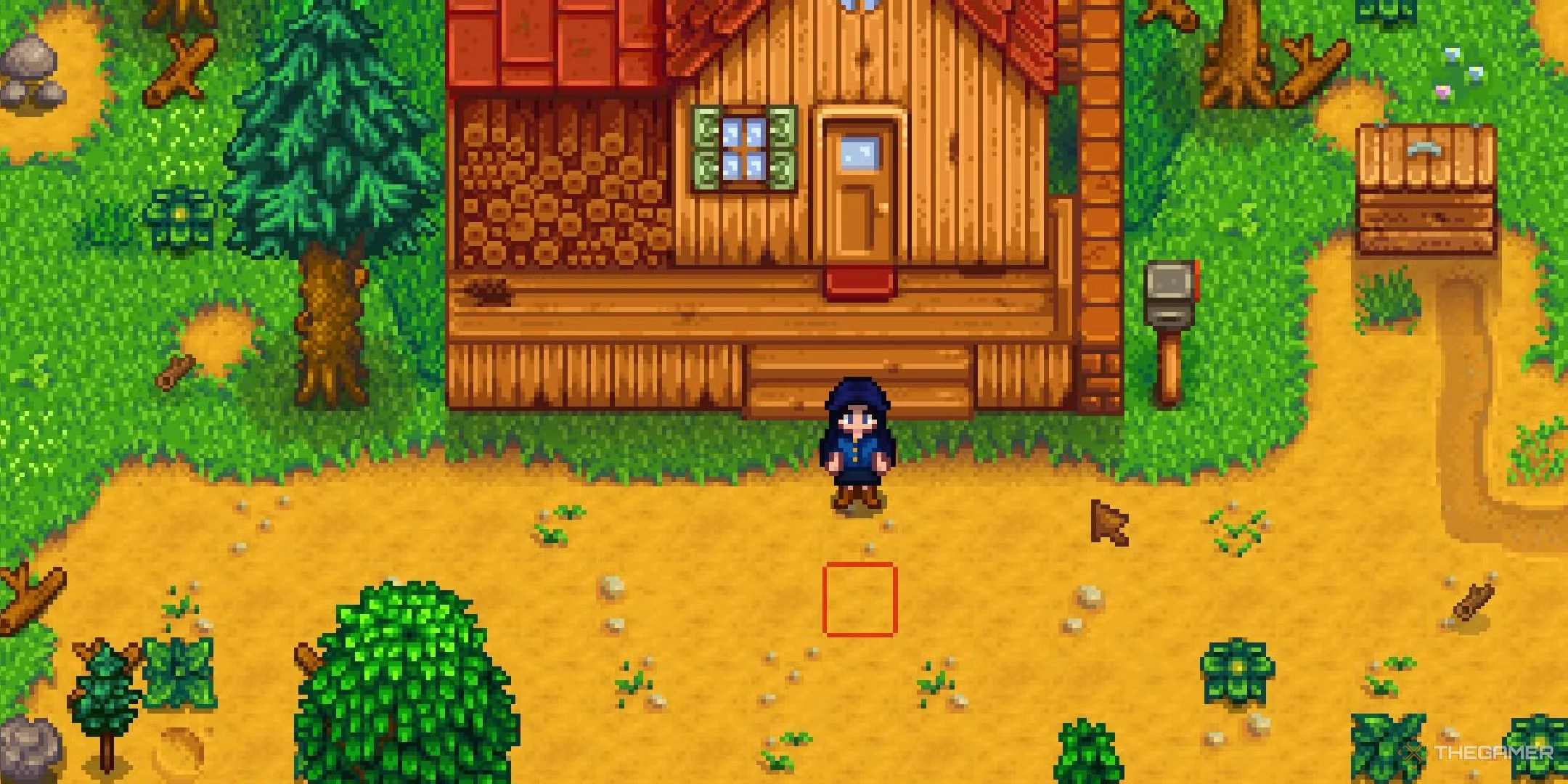
stardew valley. player standing on farm on the first day

ConcernedApe’s farming simulation masterpiece continues to receive updates that expand its already massive content offerings. The mobile version features touch controls that some players actually prefer to the original mouse and keyboard interface, with simplified menus that make inventory management more intuitive.

Dead Cells Mobile – Best Action Indie Game 2025

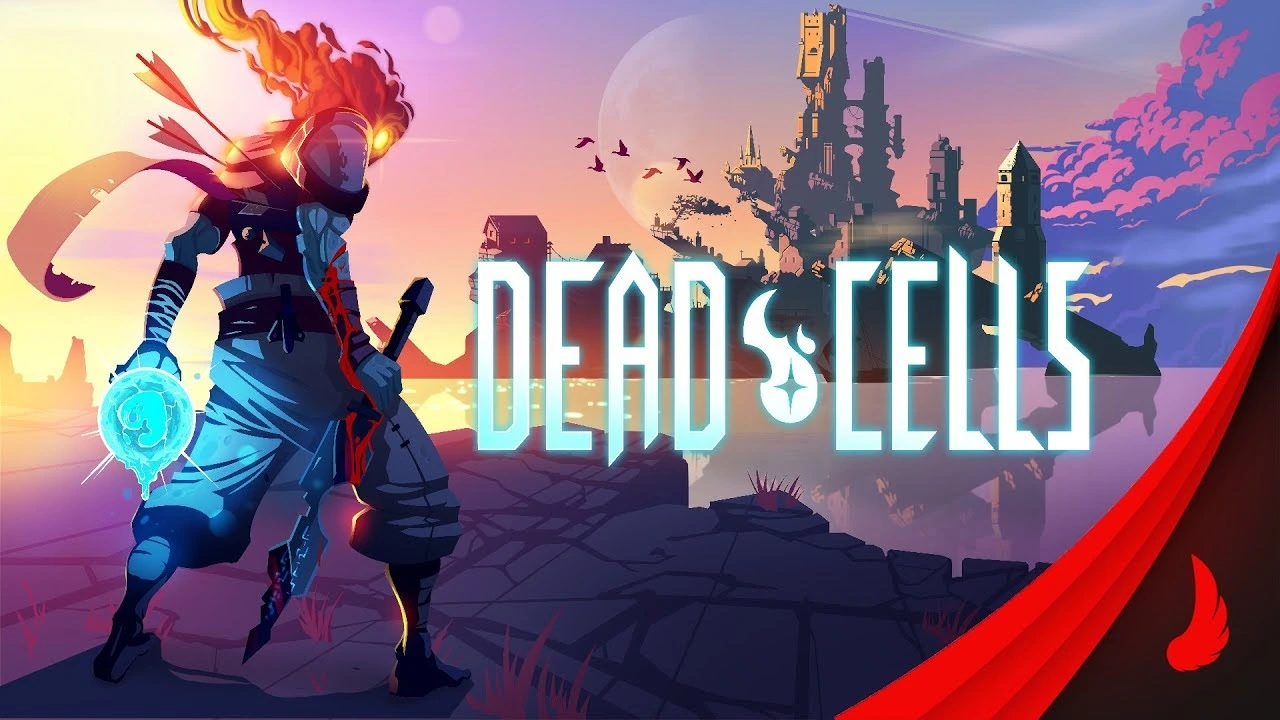
Dead cells mobile

Motion Twin’s roguelike action game successfully translates its complex combat to touchscreens through adaptive controls that adjust to player behavior. With regular free content updates and exceptional technical optimization, it remains the gold standard for action game adaptations on mobile.

Among Us VR Mobile – Best Social Indie Game 2025

among us gameplay guardian angel

Innersloth’s social deduction phenomenon expanded into mixed reality with a version that uses smartphone cameras to overlay digital elements onto physical spaces. This innovative approach allows friends to play together in the same room, creating a uniquely immersive social experience that bridges digital and physical interaction.

Tunic Mobile – Best Adventure Indie Game 2025

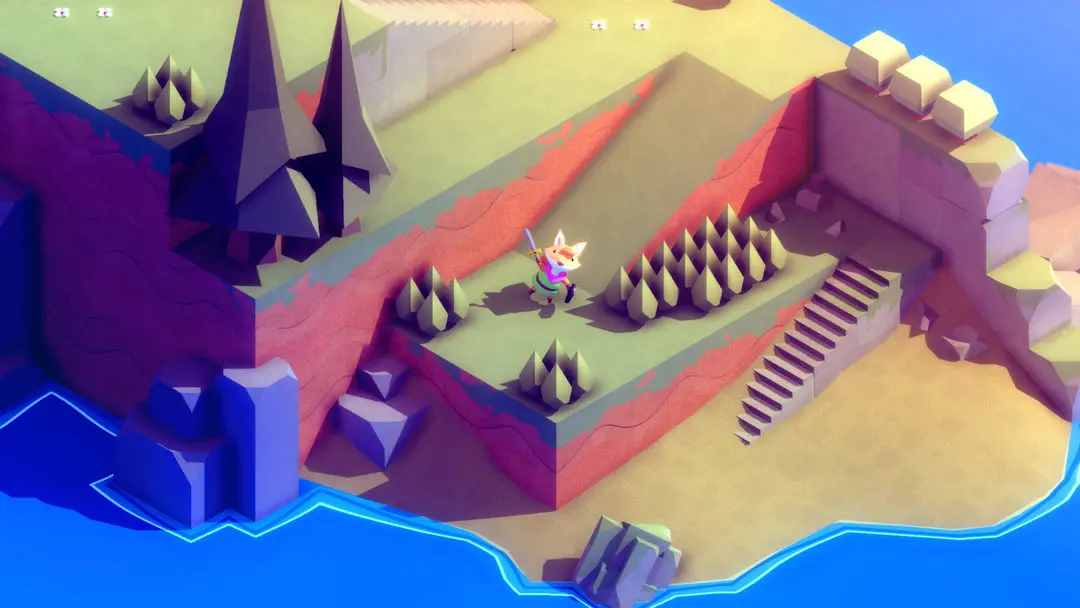
Tunic Mobile Indie Game

Andrew Shouldice’s isometric action-adventure made its mobile debut after extensive interface redesign for touchscreen controls. The game maintains its sense of discovery and non-verbal storytelling, with its in-game instruction manual and cryptic language creating a sense of mystery rarely found in mobile titles.

New and Upcoming Mobile Indie Games in 2025

The second half of 2025 promises several anticipated releases:

  • Cult of the Lamb Mobile (September 2025) – Management sim/roguelike hybrid with redesigned controls
  • Wingspan Mobile (August 2025) – Definitive adaptation of the award-winning bird-collecting board game
  • Slime Rancher: Portable Edition (November 2025) – First-person ranching sim redesigned for mobile
  • Valheim Pocket (December 2025) – Survival crafting adaptation with cross-play functionality

Follow developers like Snowman (Alto’s Odyssey), Raw Fury, and Amanita Design (Machinarium) for consistently innovative mobile experiences throughout the year.

Mobile Indie Game Trends in 2025

Cross-Platform Integration

Cross-platform functionality has evolved from marketing term to essential feature:

  • Cross-save functionality allows players to maintain progress across devices
  • Companion apps provide meaningful alternate gameplay experiences
  • Asymmetric multiplayer connects mobile and PC/console players in complementary roles

Cloud Gaming for Indie Developers

Cloud infrastructure has democratized access to complex computational resources:

  • Microsoft’s Xbox Cloud Gaming and NVIDIA’s GeForce NOW both established indie-focused programs
  • Amazon Luna’s Indie Channel launched with favorable revenue sharing models
  • Google’s Stadia technology repurposed into developer tools for cloud-assisted features

Integration of AI and AR in mobile indie games

Artificial intelligence and augmented reality have become meaningful design elements:

  • Procedural content generation creates contextually aware experiences
  • Accessibility innovations adapt difficulty based on player performance
  • Location-based AR creates persistent alternate realities through platforms like Niantic’s Creation Platform

Rise of Narrative-Driven Indie Games

Story-focused experiences have found particular success:

  • Interactive fiction evolved through tools like Ink and Twine
  • Visual novels expanded beyond traditional audiences
  • Environmental storytelling creates narrative with limited text
  • Episodic releases allow developers to adjust based on player feedback

How to Discover the Best Mobile Indie Games in 2025

Using Social Media and Communities

  • TikTok’s #IndieGameDev hashtag (1.7+ billion views) connects players directly with developers
  • Reddit communities like r/iosgaming and r/AndroidGaming feature recommendation threads
  • YouTube channels like TouchGameplay offer unedited gameplay footage

Best mobile game discovery platforms

  • TouchArcade provides detailed reviews and active community forums
  • AppRaven features community-curated collections highlighting quality indies
  • MiniReview combines concise analysis with powerful filtering tools
  • Pocket Gamer offers comprehensive coverage of control schemes and progression systems

Final Thoughts – Why Mobile Indie Games Matter in 2025

Independent mobile games represent gaming in its purest form – unburdened by shareholder expectations and free to experiment with innovative mechanics, unusual themes, and authentic artistic expression. As major studios increasingly focus on engagement metrics and monetization strategies, indies remind us that games can be meaningful artistic experiences rather than just products.

The accessibility of mobile platforms means these creative experiments reach audiences who might never self-identify as “gamers,” helping diversify both creator and player communities. By supporting indie developers through purchases, reviews, and community engagement, we invest not just in individual games but in the continued evolution of gaming as an art form.

Categories
Blog

A World of Mobile Puzzle Games – Online Puzzle Games are Still the Best in 2025 

In an age where our attention spans are rumored to have shrunk to that of a goldfish’s memory, there exists a glorious contradiction…Our obsession with mobile puzzle games and why puzzle games are still the best even in 2025!

These digital brain-teasers are making us gleefully waste hours rearranging colored blocks, connecting pipes, and even solving ever-crueler logic challenges.

What alchemy, I wondered, turns these somewhat simple puzzle game apps into portals of infinite engagement?  

The Paradoxical Appeal of Mobile Puzzle Games 

It’s delightfully ironic, that we should be playing these games with devices that sometimes cost more than $1000 each, these technological marvels that can potentially access the sum of human knowledge, and instead we slide candies around, or fit tetramines into straight lines.

But when it comes to mobile puzzle games, the genre reigns supreme in the kingdom of our daily routines, claiming the spaces between obligations and commutes (and that uncomfortable three-minute void while we’re waiting for our coffee).

The game’s genius is in its duplicity, a challenge that is totally accessible, a game that is both simple and complex, brief and infinite.

Unlike their high-octane gaming cousins, twitchy games of reflex, coordination and dexterity, puzzle games invite everyone to the table with a deceptively simple premise: “Solve me… if you can.”  

Why Puzzle Game Apps Have Collected on Your Phone (and in Your Brain) 

"Illustration showing dopamine reward loop from mobile puzzle game 'Level Complete!' notification lighting up brain pathways.

The Dopamine Loop Masters 

In 2025 Modern puzzle games are the the best because the neurochemical slot machine has been perfected. Every level completed gives a perfect microdose of success…just enough dopamine to ensure that you find you’re reaching for “just one more level.” This biochemical reward system turns waiting rooms and metro rides into chances for micro-triumphs. 

The Ideal Cognitive Sandwich 

The best mobile puzzle games live in that sweet spot between the anxiety of boredom and the boredom of anxiety, difficult enough to be engaging, not so difficult as to be frustrating.

It’s this cognitive Goldilocks zone that keeps millions coming back to apps like Candy Crush Saga, Wordle, and 2048, even when “I deleted that time-waster last week.” 

The Revolution of Accessibility 

Diverse group of people of all ages enjoying accessible mobile puzzle games on their phones in everyday settings

Unlike console games, which demand their own hardware and time commitment, puzzle game apps meet us right where we are, that is, in our pockets.

Mobile puzzle games have democratized games, allowing everyone from ages 5 to 105 to become game players in increasingly incalculable numbers, people aren’t restricted anymore by the old school Nintendo ageism, gender bias or experience level. 

How Puzzle Games Have Evolved from Tetris to Today 

Colorful Tetris blocks falling into place on a digital screen, symbolizing puzzle-solving, focus, and classic mobile gaming.

The current generation of mobile puzzle games connects back games such as Tetris and Minesweeper to analog ancestors such as Rubik’s Cube and crossword puzzles, back to mathematical problems many hundreds if not thousands of years old that have teased human brains through the ages.

What is miraculous is the degree to which puzzle games have retained their essential DNA while learning to thrive in new technological contexts.

The loop is familiar, pose a problem, reward the solution, amp up the difficulty.

This formula is as effective on smartphones as it is on Game Boys or in newspaper puzzle sections.  

The Mental Power Players – Decoding the Greatest Mobile Puzzle Games 

Pattern Recognition Titans 

Games such as Candy Crush Saga and Bejeweled are designed to take advantage of our brain’s basic pattern-recognition system, one of our species’ evolutionary tools.

This system developed to aid our survival, but here it works by matching colorful gems.

These games are the product of a clever master plan to combine chance and skill in such a way that it always feels as if next time, with just a bit more strategy, we’ll finally conquer that level that’s been tormenting us for days. 

Mystery Map Makers 

Apps such as Sudoku, Nonograms and logic puzzles work different neural pathways, firing our deductive reasoning and methodical thinking.

The pleasure of methodically excluding possibilities until only the right answer is left touches something deeper in our need for a world of order in the face of chaos.  

Masters of Spatial Reasoning 

"Smartphone screen showing surreal, impossible architecture from a spatial reasoning mobile puzzle game like Monument Valley.

From Monument Valley to The Room series, spatial puzzle games make our phones into playgrounds for impossible architecture.

These games subvert our sense of dimensionality and laws of physics, and are capable of magic moments when solutions come out of nonsensical scenarios. 

How Puzzle Games Rule the App Store 

Puzzle games lead to a set of metrics that algorithms go gaga for, long session times, high return rates, and great user retention.

These kind of behavioral dat will convince search algorithms and app stores alike that these are experiences that deliver real value, and their visibility will increase in a virtuous cycle of discovery and engagement.

The social aspect of many popular puzzle games such as Wordle and Candy Crush, generates its own mobile network effects that a traditional marketing budget can rarely buy. 

The Cognitive Benefits Hidden in Play 

Illustration showing cognitive benefits of mobile puzzle games: icons for memory, focus, problem-solving within a head silhouette.

As we are arranging colored blocks or figuring out word puzzles, something extraordinary is happening below the surface.

Studies have indicated that some benefits of playing puzzle games may often include 

  • Increased Analytical skills 
  • Pattern recognition enhancement 
  • More detail orientated 
  • Improved short-term memory 
  • Reduce stress through concentrated involvement,  

 These cognitive benefits turn what might otherwise be considered “wasted time” into stealth mental workouts, brain-gym sessions in the guise of entertainment! 

The Next Evolution in Mobile Puzzle Games – Where Brain Meets Machine 

Concept art of future mobile puzzle games using AR to overlay interactive puzzles onto a real-world environment via glasses.

With the coming of advanced AI, AR, and prolific computational power, we’re ready for the next generation of puzzle games.

Think puzzles that adapt in real-time to your individual cognitive strengths and weaknesses.

AR puzzles that turn your living room into an escape room. The basics won’t change.

We have a human need to solve, to bring order to chaos, to overcome challenges, but how these primal urges are expressed will never stop developing in step with the progress of technology. 

Conclusion – The Mystery of Why We Are Perplexed 

Perhaps the most puzzling one is why these light little challenges have taken such a hold on us.

Why, in a universe of endless content and finite attention, do we elect to spend precious minutes rearranging virtual tiles or solving brain teasers?

Perhaps the solution lies in our basic nature, as humans, we are problem solvers.

From the earliest days of working out how to light fires, to our current efforts to grapple with quantum computing, we’re a species that is always working out how to solve, to understand and to master.

Mobile puzzle games drill down on this age-old inclination, turning it into tiny, digestible challenges that fit perfectly within our digital age.

So, the next time you catch yourself “wasting time” on a mobile puzzle game, remember that you are also partaking in a distinctive human tradition, exercising neural pathways that evolved over millions of years and savoring the small victories that make us who we are, one solved puzzle at a time. 

 On the hunt for your next mind-bending challenge?

Try Exscape’s puzzle games. It is the best puzzle game app that you need to start using on your daily commute to turn that brain training into a gripping quest!

Whether you prefer classicpuzzle games or want to play the latest mobile puzzle games there is a perfect match waiting for you.

Start improving your mind the easy way today.  


Categories
Blog

7 Hot Secrets of Online Board Games You Don’t Know 

Learn how board games, with their new online, digital counterparts, are changing casual game-night plans by enabling friends and family to enjoy the fun even when they can’t be together. This complete guide tells you all about online board games and table top gaming in 2025. 

Introduction – The Digital Revolution of Classic Boardgames 

Discover how classic board games are going digital in 2025—bringing friends and families together anywhere in the world in this guide.

Remember gathering around the kitchen table for family game night?

The satisfying clack of game pieces, the shuffle of cards, the occasional heated debate over rules?

Those cherished moments haven’t gone away — they’ve transformed.

Now, online board games have adapted these experiences for the digital age, enabling players to socialize no matter how far apart they may be.

 As someone who has spent way too much time digging through the ins and outs of virtual tabletop systems, I can personally attest to the way gaming online transitioned from a basic digital port industry to an ever-growing complex of interactive, rich experiences that at times exceed their real world versions.

Whether you’re an experienced gamer who’s just looking to increase your digital collection or a new player who’s not sure where to start, this guide is meant to guide you through the fun of playing board games in an online setting.

Why Online Board Games Are Booming in 2025 

Discover how classic board games are going digital in 2025—bringing friends and families together anywhere in the world in this guide.

The popularity of online board games has skyrocketed for several compelling reasons;

Accessibility – Play anytime, anywhere, with anyone—even friends across different time zones or continents. 

Variety – Access thousands of games without the storage space physical games require. 

Cost-Effective – Many platforms offer free-to-play options or one-time purchases instead of collecting expensive physical sets. 

Automatic Rule Enforcement – No more rulebook debates—the game handles the rules for you. 

Enhanced Features – Digital adaptations often include tutorials, animations, and features impossible in physical formats. 

 The Best Platforms for Online Board Games 

Discover how classic board games are going digital in 2025—bringing friends and families together anywhere in the world in this guide.

  1. Board Game Arena

With over 500 licensed games and a robust free tier, BoardGameArena remains the gold standard for browser-based board gaming. Their premium subscription ($4/month) unlocks the full library and the ability to host premium games for free players.

Notable games: 7 Wonders, Carcassonne, Pandemic

  1. Tabletopia

This virtual tabletop simulator delivers a more real-world 3D feel that closely emulates physically playing actual board games. With more than 1,500 games and a growing library, it’s perfect for anyone craving variety. 

Popular games: Scythe, Terra Mystica, Wingspan 

  1. Tabletop Simulator

Available on Steam with mind-blowing customization and user-generated content. It has a steeper learning curve, but offers the most flexibility for creative players. 

Providing a more real 3D feel, like you were actually playing one of the board games in real life. With more than 1,500 games and an expanding catalogue, it’s best for browsers.

Signature games: Scythe, Terra Mystica, Wingspan 

Notable games: Gloomhaven, Spirit Island, and countless custom mods

  1. Digital Board Game Apps

Many popular board games have standalone mobile/PC applications that offer polished, streamlined experiences.

Ticket to Ride Digital: Perfect implementation of the railway-building classic 

Wingspan Digital: Beautiful adaptation of the bird-collecting strategy game

Root Digital: The woodland warfare game comes to life with charming animations  

7 Secrets to Elevate Your Online Board Gaming Experience 

Secret #1 – Use Voice Chat for Maximum Enjoyment 

Text chat works in a pinch, but voice communication dramatically improves the social experience. Platforms like Discord integrate perfectly with most online board game platforms and enhance the feeling of playing together. 

Secret #2 – Start with Digital Versions of Games You Already Know 

Familiar with Catan or Ticket to Ride? Begin your online journey with games you understand, then branch out as you become comfortable with the digital interface. 

Secret #3 – Take Advantage of Tutorials and AI Opponents 

Many digital board games offer excellent tutorials and the option to play against AI. This provides a low-pressure environment to learn complex games before facing human opponents. 

Secret #4 – Join Online Communities for Game Recommendations 

Communities on Reddit (r/digitaltabletop, r/boardgames) and Discord servers dedicated to specific platforms are goldmines for discovering games that match your interests. 

Secret #5 – Look for Asynchronous Play Options 

Can’t coordinate schedules? Many platforms support asynchronous play—make your move when convenient, and your opponents will do the same when they’re available. Perfect for busy adults! 

Secret #6 – Subscribe to Multiple Platforms During Sales 

Platforms frequently offer discounted subscriptions. Rotating between services gives you access to thousands of games at a fraction of what physical collections would cost. 

Secret #7 – Explore Digital-Only Board Games 

Some of the most innovative board games now release as digital-first or digital-only titles, offering experiences impossible in the physical realm with complex calculations, hidden information management, and dynamic storytelling. 

Popular Online Board Game Categories 

Discover how classic board games are going digital in 2025—bringing friends and families together anywhere in the world in this guide.

Strategy Games 

Digital adaptations shine for complex strategy games, handling intricate calculations and rule enforcement.

  • Civilization Builders –Through the Ages, Brass Birmingham 
  • Area Control – Root, Small World 
  • Worker Placement – Agricola, Lords of Waterdeep 

Family-Friendly Games 

Perfect for virtual family game nights across households: 

  • Cooperative Games – Pandemic, Forbidden Island 
  • Party Games – Codenames Online, Wavelength Digital 
  • Classic Games – Monopoly Online, Scrabble Digital 

Card Games 

Digital card games offer smooth shuffling and handling: 

  • Trick-Taking – Hearts, Euchre 
  • Trading Card Games – Magic: The Gathering Arena 
  • Deckbuilders – Star Realms, Dominion Online 

How to Host a Successful Virtual Game Night 

  1. Plan ahead – Send calendar invites with platform links and game choices 
  1. Start simple – Choose games with short playtimes for your first sessions 
  1. Consider mixed experience levels – Select games accessible to newcomers 
  1. Have backup options – Technical issues happen—have alternative games ready 
  1. Schedule breaks –Digital fatigue is real, especially for longer sessions 

The Future of Online Board Gaming  

Discover how classic board games are going digital in 2025—bringing friends and families together anywhere in the world in this guide.

The line between physical and digital board gaming continues to blur in fascinating ways. We’re seeing emerging trends like.

  • Hybrid games that combine physical components with digital apps 
  • Augmented reality elements enhancing traditional board game experiences 
  • Cross-platform play allowing seamless transitions between devices 
  • Virtual reality board gaming creating immersive 3D tabletop experiences 

Conclusion – Building Community Through Digital Play 

The greatest achievement of online board games isn’t technical—it’s social. These platforms have created spaces where distance no longer prevents meaningful connection through play. 

Whether it’s reconnecting with friends who are all over the world, keeping traditions alive with family over generations, or meeting new players with common interests, there is something uniquely valuable about online board games: genuine human connection through shared experiences. 

Naturally, as technology evolves, those tactile physical elements that we could do without from physical board games are being recreated behind a digital screen. But the essence of what makes board games great — strategic thinking, social interaction and collective moments of triumph or defeat — is well preserved, if not sometimes improved, in their digital duplicates. 

Are you ready for some online board game goodness? The digital table is set, and there’s always space for one more player. 

What is your favorite one online board game? Leave your recommendations in the comments! 

Categories
Blog

The Exscape Points Guide – How to Play, Earn Points and Win Big!

In Exscape, we don’t just play to pass time—we play to win big. Whether you’re navigating twisted mazes, braving the Survivor Zone, or hunting for magical treasures, every move you make adds to your power, your points, and your prize potential.

Let’s break it down. 

🎯 What Is the Exscape Points System? 

At the core of Exscape is a powerful weekly and monthly points system that rewards consistency, strategy, and skill. Here’s how it works:

  • Every week, 515 players win prizes and earn leaderboard glory.
  • Every month, we celebrate 2,063 winners—including our top 3 champions, who earn major rewards or unlock the chance to convert their points into prizes of their choice.

You don’t need to be a full-time gamer to win—just clever, quick, and a little competitive. 


🔥 Weekly Challenges, Real Rewards 

Each week, your leaderboard position resets, giving you a brand new chance to rise to the top. Play smarter, score higher, and climb fast. 

🧩 Easy Mazes — 3x More Points 

These are your perfect starting ground for fast wins. 

  • 🥇 1st Place — 15 Points 
  • 🥈 2nd Place — 12 Points 
  • 🥉 3rd Place — 9 Points 
  • 🎖️ 4th Place — 6 Points 
  • 🏅 5th Place — 3 Points 

Discover how to earn points by playing games with Exscape, redeem them in the awards section and win incredible prizes!

⚙️ Medium Mazes — 4x the Power 

You’ve got the skills—now use them to dominate the leaderboard. 

  • 🥇 1st Place — 20 Points 
  • 🥈 2nd Place — 16 Points 
  • 🥉 3rd Place — 12 Points 
  • 🎖️ 4th Place — 8 Points 
  • 🏅 5th Place — 4 Points 

Discover how to earn points by playing games with Exscape, redeem them in the awards section and win incredible prizes!

🧠 Difficult Mazes — 5x the Challenge, 5x the Reward 

Only the bold survive here. But if you win, you win big. 

  • 🥇 1st Place — 25 Points 
  • 🥈 2nd Place — 20 Points 
  • 🥉 3rd Place — 15 Points 
  • 🎖️ 4th Place — 10 Points 
  • 🏅 5th Place — 5 Points 

Discover how to earn points by playing games with Exscape, redeem them in the awards section and win incredible prizes!

🕹️ More Ways to Earn 

💥 Weekly Game Leaderboard 

No matter what casual game you play on Exscape, leaderboard winners get rewarded. 

  • 🥇 1st Place — 5 Points 
  • 🥈 2nd Place — 4 Points 
  • 🥉 3rd Place — 3 Points 
  • 🎖️ 4th Place — 2 Points 
  • 🏅 5th Place — 1 Point 

☠️ Survivor Zone — Where Only the Strong Score 

Discover how to earn points by playing games with Exscape, redeem them in the awards section and win incredible prizes!

This is not for the faint-hearted. But if you survive, the rewards are sweet. 

  • 🥇 1st Place — 25 Points 
  • 🥈 2nd Place — 20 Points 
  • 🥉 3rd Place — 15 Points 
  • 🎖️ 4th Place — 10 Points 
  • 🏅 5th Place — 5 Points 
🕛 Points reset every Sunday at 12:01 AM — Start fresh, finish first. Win Big

Now listen up, because this is important! If you start playing on Wednesday, you’ll have to earn more points than someone who’s been playing since Sunday to come out on top!  

🪙 Treasure Hunt  Points in Every Collectible 

Discover how to earn points by playing games with Exscape, redeem them in the awards section and win incredible prizes!

Our Treasure Hunt Challenge is where explorers thrive. This is very different to our other games! The collectables you find convert straight into wallet points—which you can spend on real rewards in the Exscape marketplace.

Each item has its own value: 

  • ⭐ Star — 1 Point 
  • 🔴 Circle — 20 Points 
  • 💎 Diamond — 1,000 Points 

And get ready for our newest challenge—Sky Kingdom—a stunning, magical realm filled with treasures waiting to be claimed. It’s not just beautiful—it’s packed with points.


💼 Monthly Winners. Real Prizes. 

At the end of every month, your total points from all activities are tallied. The top 3 players receive exclusive prizes, or they can redeem their total points for a prize of their choice. 

Yes, you read that right. Your grind = your reward. 


🏆 Why Play on Exscape? 

  • Thousands of weekly and monthly winners 
  • Multiple ways to earn points 
  • Prizes you choose or win 
  • Casual and competitive games that suit every playstyle 

Whether you’re in it for the fun, the prizes, or the glory—Exscape’s points system turns every game into a chance to win. 


Play games. Earn points. Win your way. 

Join the Exscape community and start building your score today. Because here, every second counts, every point matters, and every player has a shot at greatness.


Categories
Blog

Cloud Gaming’s Mobile Revolution – When Your Phone Becomes More Powerful Than A Console

Your smartphone just pulled off the ultimate power move—it’s now more powerful than that $500 console collecting dust in your entertainment center. Not because of some miraculous leap in mobile processor technology, but because of a far more elegant solution: letting powerful servers do the heavy lifting while your phone simply displays the results.

Welcome to the cloud gaming revolution, where the computational brawn behind AAA gaming experiences has been relocated from under your TV to massive data centers, transforming your humble smartphone into a thin client for gaming experiences previously unimaginable on mobile hardware. It’s not just a technological shift—it’s a fundamental reimagining of what mobile gaming can be.

The Current State of Mobile Cloud Gaming

The mobile cloud gaming market has evolved from experimental curiosity to legitimate gaming platform with remarkable speed. Current estimates place the global cloud gaming market at approximately $5.4 billion in 2025, with mobile access representing over 40% of that figure—a percentage that continues to grow as smartphone penetration increases globally.

Key players in this space represent a fascinating mix of traditional gaming powerhouses and tech infrastructure giants. Microsoft’s Xbox Cloud Gaming (formerly xCloud) has aggressively expanded its mobile presence, while NVIDIA’s GeForce NOW offers PC gaming experiences on mobile devices. Google’s Stadia may have faltered, but Amazon’s Luna continues the tech giant push into the space. Meanwhile, telecommunications companies like Verizon and T-Mobile are partnering with gaming providers, recognizing cloud gaming as a compelling showcase for their network capabilities.

Adoption rates reveal interesting demographic patterns that challenge conventional gaming stereotypes. While traditional console and PC gaming skews heavily male in many markets, mobile cloud gaming shows more balanced gender distribution. Age distribution similarly defies expectations, with significant adoption among users in their 30s and 40s—people with gaming interest but limited time for dedicated gaming sessions, who appreciate the flexibility cloud gaming offers.

When compared with traditional mobile gaming, cloud gaming represents a fundamentally different value proposition. Traditional mobile games are designed around the limitations of the platform—short play sessions, simplified controls, and graphics constrained by local hardware. Cloud gaming instead brings console and PC experiences unmodified to mobile, essentially arguing that the limitations of mobile as a gaming platform can be overcome not by designing around them, but by sidestepping them entirely.

How Cloud Gaming Solves Mobile’s Biggest Limitations

Mobile gaming has always faced four fundamental constraints: storage capacity, processing power, battery life, and control limitations. Cloud gaming addresses each of these with elegant (if bandwidth-intensive) solutions.

Storage constraints become irrelevant when games run remotely. A typical AAA title might require 100+ GB of local storage—impossible on most mobile devices where users balance gaming with photos, videos, and other apps. Cloud gaming reduces local storage needs to essentially zero, with even the client applications requiring minimal space. Your entire gaming library exists in the cloud, accessible without installation or updates.

Processing power limitations similarly evaporate. When games run on server-grade GPUs and CPUs, the computational requirements for the mobile device reduce to video decoding—something even budget smartphones handle efficiently. This democratizes access to high-end gaming experiences, allowing a three-year-old mid-range phone to play the latest titles at settings that would challenge even current-generation consoles.

Battery life considerations become more nuanced. While cloud gaming eliminates the battery drain from local processing, it introduces constant network utilization which has its own power cost. However, the net result typically favors cloud gaming—streaming a game generally consumes less power than rendering it locally, often extending play time by 30-40% compared to demanding mobile titles running natively.

Perhaps most significantly, cloud gaming has driven innovation in mobile control schemes. While touch controls remain problematic for games designed with physical inputs in mind, the cloud gaming boom has accelerated development of affordable, portable controllers designed specifically for mobile use. Simultaneously, game services have invested in touch adaptation layers that intelligently map traditional controls to touch interfaces, with increasingly impressive results.

The cumulative effect is nothing short of revolutionary—a fundamental expansion of what “mobile gaming” can mean. Games no longer need separate “mobile versions” with reduced features and simplified gameplay. The full experience comes to your phone, uncompromised and unaltered.

The Technical Infrastructure Making It Possible

Behind the seemingly magical experience of playing console-quality games on a smartphone lies an impressive technical infrastructure that spans from massive data centers to the radio towers connecting to your device.

The critical role of 5G networks in enabling mobile cloud gaming cannot be overstated. While cloud gaming is technically possible on 4G connections, the higher bandwidth (typically 100+ Mbps) and lower latency (potentially sub-20ms) of 5G networks transforms it from a compromised experience to one that can rival local play. The rollout of standalone 5G networks with network slicing capabilities further enhances this, allowing carriers to prioritize gaming traffic for subscribers of cloud gaming services.

Edge computing represents another crucial advancement, bringing game rendering servers physically closer to players. Rather than centralizing all computing in a handful of massive data centers, edge computing distributes processing across numerous smaller facilities located near population centers. When your game runs on a server 15 miles away instead of 500, the reduction in latency makes a perceptible difference in responsiveness.

Data centers themselves have been optimized specifically for game streaming workloads, with specialized hardware configurations that differ from typical cloud computing setups. Game streaming requires different GPU-to-CPU ratios, memory configurations, and storage optimization compared to web services or business applications. Major cloud providers now offer gaming-specific infrastructure that balances these requirements for optimal performance.

Compression technologies that maintain visual quality while reducing bandwidth requirements represent perhaps the most underappreciated component of the system. Advanced codecs like H.265/HEVC and AV1 can deliver visually lossless 1080p gaming at bitrates as low as 10 Mbps, with machine learning-enhanced upscaling maintaining perceived quality even when network conditions force temporary bitrate reductions.

The Economics of Mobile Cloud Gaming

The financial models underpinning mobile cloud gaming differ fundamentally from traditional game distribution, creating new relationships between players, developers, and platform holders.

Subscription models dominate the cloud gaming landscape, with most major services charging monthly fees for access to both the streaming technology and a library of games. This contrasts sharply with traditional game purchases, moving from an ownership model to an access model. For consumers, this reduces the upfront investment required to play premium games but potentially increases long-term costs for dedicated players.

Cost analysis for consumers presents interesting tradeoffs between cloud subscriptions and hardware upgrades. A two-year cloud gaming subscription typically costs less than a new console or gaming PC, but more than a mid-range smartphone upgrade. However, the subscription provides access to hundreds of games, potentially offsetting additional game purchase costs. The value equation depends heavily on individual play habits and game preferences.

From publisher and developer perspectives, cloud gaming creates both opportunities and challenges. The subscription model provides more predictable revenue but potentially lower per-player monetization compared to traditional $60-70 game purchases. However, cloud platforms dramatically expand the potential audience, reaching players who would never purchase dedicated gaming hardware.

Monetization strategies continue evolving in response to these new distribution models. Some publishers withhold their newest releases from subscription services, offering them only as premium purchases even within cloud platforms. Others embrace the subscription model but incorporate in-game purchases or expansions as additional revenue streams. The most successful approaches typically combine subscription access with optional premium purchases for dedicated players who want additional content.

The User Experience Revolution

Beyond the technical and economic implications, cloud gaming is fundamentally changing how people interact with games on mobile devices.

Controller options have expanded dramatically, with manufacturers creating increasingly sophisticated mobile-specific controllers. From simple clip-on designs that attach to phones to elaborate folding controllers that transform smartphones into Switch-like portable consoles, hardware innovation is eliminating the control disadvantage mobile gamers traditionally faced. Simultaneously, touch interface innovations are making controller-free play increasingly viable for games never designed with touch in mind.

Cross-platform play and progression have become standard features, allowing players to seamlessly transition between mobile, console, and PC versions of the same game. Start a game on your console in the morning, continue on your phone during lunch break, and pick up exactly where you left off on your PC in the evening—all accessing the same save data and online identity. This continuity eliminates the traditional segregation between “mobile gaming” and “real gaming” sessions.

Social features in cloud gaming environments often exceed those of traditional mobile games, bringing full-featured party systems, voice chat, and spectator modes to mobile devices. These capabilities transform smartphones from solitary gaming devices into social hubs, allowing complex coordination in team games that was previously impossible on mobile.

Perhaps most significantly, cloud gaming is changing mobile gaming sessions from quick time-fillers to potential full-length experiences. While traditional mobile games are designed around 5-10 minute play sessions, cloud gaming enables meaningful progress in premium games even in relatively short sessions. This fundamentally changes when and where people play, making substantive gaming experiences accessible in contexts previously limited to casual games.

Challenges and Growing Pains – Buffering in the Gaming World

Despite its transformative potential, mobile cloud gaming faces several significant challenges that continue to limit its mainstream adoption.

Latency issues remain the most fundamental technical hurdle, particularly for reflex-intensive genres. While 5G and edge computing have reduced input lag significantly, the laws of physics impose hard limits on how quickly data can travel. Fighting games, competitive shooters, and rhythm games remain particularly challenging, as even 50ms of additional latency can significantly impact performance. However, turn-based games, RPGs, and strategy titles suffer minimal impact from slight latency, making them natural fits for cloud platforms.

Data consumption presents another significant concern, particularly in markets with expensive or capped mobile data plans. A cloud gaming session can consume 3-10GB of data per hour depending on quality settings, making it impractical for many users without WiFi access. Telecommunications companies are responding with gaming-specific data plans, but cost remains a barrier to truly mobile cloud gaming adoption.

Regional availability creates significant disparities in the cloud gaming experience. While users in major metropolitan areas of developed nations may have access to multiple competing services with nearby edge servers, those in rural areas or developing regions often face either complete unavailability or compromised performance due to distance from server infrastructure. This creates a geographic digital divide in access to these new gaming experiences.

Competition with native mobile gaming experiences ensures that cloud gaming must deliver significant advantages to overcome the convenience of games designed specifically for mobile devices. For casual players satisfied with traditional mobile games, the additional complexity and potential cost of cloud gaming may not deliver sufficient benefits to drive adoption.

The Future of Mobile Cloud Gaming

Looking ahead, several emerging trends suggest where mobile cloud gaming is headed in the coming years.

Technology advancements will continue reducing the friction points in the cloud gaming experience. Wi-Fi 6E and eventually Wi-Fi 7 will reduce wireless latency in home environments. Advanced compression algorithms will further reduce bandwidth requirements while maintaining visual quality. Mobile-specific features like predictive input technology may eventually reduce perceived latency below what’s physically possible with traditional approaches.

Artificial intelligence will increasingly enhance cloud gaming experiences in ways impossible with purely local processing. AI upscaling can improve visual quality beyond the actual stream resolution. Predictive rendering can speculatively process potential player actions before they occur, further reducing perceived latency. Voice control and other AI-assisted interfaces may make complex games more accessible on mobile devices without traditional controls.

Perhaps most intriguingly, we may see the emergence of cloud-native game designs—titles specifically created to leverage the unique capabilities of cloud platforms while accommodating their limitations. These might include games with unprecedented computational requirements, massively concurrent player interactions, or seamless transitions between different play contexts optimized for different devices.

The long-term impact on traditional console and PC gaming remains uncertain. While some predict cloud gaming will eventually replace dedicated gaming hardware entirely, a more likely outcome is specialization—with competitive and performance-focused gaming remaining on local hardware while cloud platforms excel at convenience and accessibility.

Conclusion

Mobile cloud gaming represents the great equalizer in the gaming ecosystem—a technology that challenges our fundamental assumptions about what different devices can do. The smartphone in your pocket is no longer limited by its physical components but can tap into virtually unlimited computational resources on demand.

As network infrastructure continues improving and business models mature, we’re likely witnessing the early stages of a transformation comparable to what streaming did to video entertainment. Just as Netflix and YouTube fundamentally changed how we consume video content, cloud gaming may similarly reshape our relationship with interactive entertainment.

If you haven’t experienced cloud gaming on your mobile device yet, it’s worth exploring the options available on your platform of choice. The technology has advanced remarkably in recent years, and you might be surprised to find console-quality experiences waiting to be played on the device you already carry everywhere. The future of gaming isn’t coming to your phone—it’s already there, streaming in real-time from a server near you.

Categories
Blog

AI Gaming Companions – When Your Toughest Opponent Is Learning Your Play Style

Remember when beating the computer meant outsmarting predictable patterns? Those days are gone—your digital opponents are now studying you like a chess grandmaster with unlimited coffee. The age of simplistic, rule-following game AI has given way to something far more intriguing: adaptive companions and opponents that learn, evolve, and occasionally make you question whether you’re playing against code or consciousness.

This isn’t just another incremental improvement in gaming technology—it’s a fundamental shift in the relationship between players and digital entities. As AI gaming companions become increasingly sophisticated, they’re transforming both competitive and cooperative gameplay in ways that blur the traditional boundaries between human and machine intelligence.

The Evolution of Gaming AI – From Predictable Bots to Digital Minds

To appreciate how far we’ve come, we need a quick history lesson in digital opposition. Early game AI was essentially a collection of if-then statements—simple decision trees that created the illusion of intelligence through predetermined responses to player actions. That ghost chasing you in Pac-Man? It followed a fixed pattern you could memorize and exploit. The boss in your favorite NES game? A sequence of movements and attacks that became predictable after a few frustrating defeats.

The shift from these rule-based systems to modern machine learning models represents one of gaming’s most significant evolutionary leaps. Rather than following explicit instructions, today’s gaming AI can analyze thousands of gameplay sessions, identify patterns, and develop strategies that their programmers never explicitly taught them.

Key milestones in this journey include IBM’s Deep Blue defeating chess champion Garry Kasparov in 1997, the development of Monte Carlo Tree Search algorithms that revolutionized game-playing AI, and perhaps most significantly, DeepMind’s AlphaGo defeating world champion Lee Sedol in 2016—a moment that demonstrated AI’s capacity to master games requiring both calculation and intuition.

What makes modern gaming AI fundamentally different is its ability to improve without explicit programming. Traditional game AI might appear to adapt, but it’s typically switching between pre-programmed behaviors based on trigger conditions. Today’s AI systems can genuinely learn from experience, developing new strategies and responses that weren’t explicitly coded by their creators.

How Modern Gaming AI Studies Your Play Style

The most sophisticated gaming AI doesn’t just play against you—it studies you with the focused attention of a behavioral psychologist with unlimited observation time. This analysis happens through multiple sophisticated mechanisms working in concert.

Data collection forms the foundation of this process. Modern games track virtually everything: which weapons you prefer, how aggressively you play, whether you prioritize exploration or objective completion, how you respond to different enemy types, and even the time patterns of your play sessions. This creates a comprehensive profile of you as a player that extends far beyond simple skill assessment.

Pattern recognition algorithms then process this behavioral data to identify your habits, preferences, and potential weaknesses. Do you always dodge left when faced with a certain attack? Do you consistently neglect to check certain corners when entering new areas? Are there specific strategies you rely on excessively? The AI notes these patterns with a precision human opponents rarely achieve.

The most advanced systems build player profiles that evolve over time, recognizing that your play style isn’t static. If you adapt to counter the AI’s strategies, it notices this meta-adaptation and adjusts accordingly, creating an ongoing evolutionary arms race between your learning and its learning—a dynamic that creates some of the most engaging competitive experiences in gaming.

Real-world examples of this sophistication abound in modern gaming. Fighting games like Street Fighter V use adaptive AI that learns your combo preferences and defensive habits. Strategy games like Civilization VI feature opponents that adjust their diplomatic and military approaches based on your historical behavior. Horror games like Alien: Isolation feature enemies that learn which hiding spots you prefer, forcing you to constantly vary your strategies.

Beyond Opponents – AI as Gaming Companions

While adaptive opponents receive much of the attention, equally fascinating is the rise of AI-powered NPCs with personality, memory, and emotional responses that create more immersive narrative experiences.

These companion AIs move beyond the functional role of traditional NPCs (give quest, provide information, assist in combat) to become characters with apparent inner lives. They remember your choices, form opinions about your actions, and develop relationships with your character that evolve based on your interactions. This creates narrative experiences that feel personalized in ways that pre-scripted stories cannot match.

The emotional connections players form with these digital companions can be surprisingly powerful. When a companion AI sacrifices itself to save you after dozens of hours of shared adventures, the emotional impact can rival that of well-crafted traditional storytelling. This isn’t merely clever writing—it’s the result of systems designed to create the impression of genuine bonds forming through shared experience.

Games like The Last of Us Part II, Red Dead Redemption 2, and Detroit: Become Human showcase how sophisticated companion AI can elevate storytelling. These companions respond contextually to the environment, comment on your choices, and appear to form their own opinions about the unfolding narrative. The result is characters that feel less like scripted automatons and more like independent entities sharing your journey.

The Technical Wizardry Behind the Curtain

The leap from simplistic game AI to today’s sophisticated systems required breakthroughs across multiple technical domains.

Machine learning models power much of this revolution, with techniques ranging from supervised learning (trained on databases of human play) to reinforcement learning (improving through trial and error). These approaches allow AI to develop strategies that might never occur to human designers, sometimes discovering exploits or techniques that surprise even the game’s creators.

Cloud computing has democratized advanced AI in gaming, allowing even mobile games to leverage sophisticated learning systems that would be impossible to run on local hardware. By offloading the heavy computational lifting to remote servers, games can implement AI that continuously learns from the collective behavior of entire player communities, not just your individual sessions.

The balance between on-device and server-side AI processing creates interesting design challenges. On-device AI provides immediate responsiveness but is limited by local hardware constraints. Server-side AI can be vastly more sophisticated but introduces latency concerns. The most effective implementations use hybrid approaches, handling immediate reactions locally while deeper learning happens in the cloud.

Emerging technologies continue pushing these boundaries further. Natural language processing allows more natural conversations with in-game characters. Computer vision techniques help AI understand and respond to complex game states. Generative models enable the creation of novel content and responses that weren’t explicitly programmed.

The Uncanny Valley of Digital Competition

As gaming AI becomes increasingly sophisticated, developers face a fascinating paradox: AI that’s too perfect isn’t fun, but AI that’s too obviously artificial breaks immersion. Finding the sweet spot between challenge and frustration requires careful calibration.

When AI becomes too human-like or too perfect, it can create uncomfortable gaming experiences. An opponent that perfectly predicts your every move feels less like a worthy adversary and more like a system unfairly reading your inputs. Conversely, an AI that makes obviously artificial mistakes destroys the illusion of facing an intelligent opponent.

The psychological impact of playing against learning systems differs significantly from traditional fixed-behavior AI. There’s something uniquely unsettling about realizing the game is adapting specifically to counter your preferred strategies—a feeling that the system is personally targeting your weaknesses rather than presenting a neutral challenge.

Finding the ideal balance requires what game designers call “deliberate imperfection”—AI that’s sophisticated enough to present a credible challenge but programmed with carefully calibrated limitations that maintain playability. The best AI opponents aren’t those that play perfectly, but those that play interestingly, creating memorable moments and challenging encounters that feel fair despite their adaptive nature.

Ethical considerations also emerge around creating potentially addictive AI opponents. When systems are specifically designed to learn and exploit your psychological triggers and play patterns, they can potentially create unhealthy engagement loops. Responsible design requires balancing effective adaptation with player wellbeing.

The Future of AI in Gaming – Your New Digital Frenemies

Looking ahead, several emerging trends suggest where AI companions and opponents are headed in the coming years.

Next-generation AI companions will likely feature significantly more sophisticated personality modeling. Rather than selecting from a few predetermined character types, these systems will generate unique personalities with complex traits, preferences, and interaction styles. Each player’s experience with ostensibly the same companion character might be subtly different based on how their relationship evolves.

AI will increasingly personalize game difficulty and progression beyond simple difficulty sliders. Future games might continuously adjust challenge levels across multiple dimensions simultaneously—enemy aggressiveness, puzzle complexity, resource scarcity—creating experiences that maintain an optimal challenge level regardless of player skill or play style.

Perhaps most exciting is the potential for AI to generate unique content and scenarios. Rather than encountering the same enemies in the same locations, future games might use generative AI to create novel challenges tailored to your demonstrated skills and preferences. A stealth player might find more opportunities for silent takedowns, while an aggressive player encounters scenarios that reward direct confrontation.

The line between human and AI players in online environments is already blurring and will likely become increasingly indistinguishable. Games might seamlessly fill multiplayer matches with AI players that mimic human behavior so convincingly that telling them apart becomes difficult. This raises fascinating questions about the nature of competition and the value we place on facing human opponents.

Conclusion

Gaming AI has evolved from a simple obstacle to overcome into a mirror reflecting our own play styles and personalities. As these systems become increasingly sophisticated, they’re transforming games from static experiences into dynamic relationships—conversations between player and system where both parties learn and adapt to each other.

The relationship between players and digital companions will continue evolving in ways that challenge our understanding of what constitutes meaningful interaction. When an AI remembers your preferences, adapts to your style, and appears to form opinions about your choices, the line between programmed response and genuine connection begins to blur in intriguing ways.

Next time you’re playing your favorite game, pay attention to how the AI behaves—you might notice it paying the same careful attention to you. That digital opponent isn’t just playing the game; it’s studying how you play, learning your habits, and quietly planning its next move based on everything it’s learned about you. In the chess match between human and artificial intelligence, the game is becoming increasingly even—and infinitely more interesting.

Categories
Blog

The Metaverse Goes Mobile – How Pocket-Sized Portals Are Redefining Virtual Reality

The metaverse isn’t just coming to your phone—it’s already there, hiding in plain sight between your social media apps and casual games. While tech titans construct elaborate visions of virtual worlds requiring expensive headsets and powerful computers, the most successful metaverse experiences are quietly conquering the device already in your pocket.

This isn’t just another case of technology democratization—it’s a fundamental rethinking of what immersive digital experiences can be when freed from the constraints of dedicated hardware. The smartphone, that rectangular slab of glass we’ve all become symbiotically attached to, is evolving from a communication tool into a dimensional portal that connects our physical reality with increasingly sophisticated virtual worlds.

The Current State of Mobile Metaverse Gaming

Before diving deeper, let’s establish what actually constitutes a “mobile metaverse” experience. While definitions vary wildly (much like the metaverse itself), the core elements include persistent virtual environments, real-time social interaction, user-generated content, and some form of digital economy—all accessible through the smartphone interface.

The market for these experiences is expanding at a pace that would make even the most aggressive mobile game progression curves look conservative. Current estimates place mobile metaverse gaming at approximately $28 billion globally, with projections suggesting this could more than double by 2027. What’s particularly striking isn’t just the financial growth but the engagement metrics—users of mobile metaverse platforms spend an average of 20% longer in-app than traditional mobile games.

Leading the mobile metaverse charge are platforms that have evolved beyond traditional gaming frameworks. Roblox, with over 70% of its massive user base accessing primarily through mobile devices, has become the de facto metaverse for younger generations. Meanwhile, platforms like Zepeto and IMVU have transformed from simple avatar creators into complex virtual societies with economies generating millions in real-world revenue.

The most telling statistic isn’t the number of downloads but the frequency of returns—mobile metaverse apps see retention rates that would make traditional mobile game developers weep with envy. When your virtual identity, social connections, and digital assets exist within an app, it becomes less a game and more a digital extension of your life.

Why Smartphones Are the Ultimate Metaverse Devices

The conventional wisdom suggests that proper metaverse experiences require specialized hardware—VR headsets, haptic gloves, and computers powerful enough to render photorealistic environments. Yet this perspective misses a crucial insight: the best technology isn’t necessarily the most advanced, but the most accessible.

With global smartphone users exceeding 6.8 billion in 2025, mobile devices offer an installed base that dwarfs all other computing platforms combined. This ubiquity creates network effects that specialized hardware simply cannot match. A metaverse that requires a $500+ headset automatically excludes most of humanity; one that runs on the device already in your pocket can potentially reach everyone.

Beyond mere accessibility, smartphones offer a sensor suite that makes them surprisingly capable metaverse interfaces. Modern phones combine cameras, microphones, accelerometers, gyroscopes, GPS, and increasingly sophisticated spatial mapping capabilities. This array of sensors enables unique metaverse interactions that blend physical and digital realities in ways dedicated VR hardware actually can’t match.

The social nature of phones aligns perfectly with the fundamental promise of the metaverse. These devices are already our primary tools for maintaining social connections—the jump from messaging apps to virtual spaces is a natural evolution rather than a paradigm shift. When your phone already serves as your social hub, extending that functionality into virtual environments feels intuitive rather than revolutionary.

Perhaps most significantly, the cost-effectiveness of mobile as an entry point to virtual experiences cannot be overstated. While dedicated VR setups represent a significant investment with a single purpose, smartphones are multi-functional tools that justify their cost through numerous utilities. The metaverse becomes not a separate purchase but an additional benefit from a device you already own.

Technical Innovations Driving the Mobile Metaverse

The mobile metaverse isn’t emerging despite technical limitations—it’s evolving because of remarkable innovations specifically in the mobile technology stack.

Advancements in mobile GPU technology have been nothing short of revolutionary. The graphics processing capabilities in today’s flagship smartphones rival what gaming consoles offered just a few years ago. This raw rendering power enables increasingly sophisticated virtual environments that maintain the visual fidelity necessary for immersive experiences.

The rollout of 5G networks represents perhaps the most significant enabler for mobile metaverse experiences. With theoretical speeds up to 10 Gbps and latency as low as 1ms, 5G removes the bandwidth barriers that previously limited real-time interaction in complex virtual environments. When hundreds of avatars can gather in a virtual space without lag, the social dynamics of the metaverse fundamentally change.

Cloud computing has emerged as the great equalizer, allowing even mid-range devices to deliver high-quality metaverse experiences. By offloading intensive computational tasks to remote servers, cloud-based rendering enables visual quality and environmental complexity that would be impossible on mobile hardware alone. The smartphone becomes less a processing center and more a viewport into cloud-rendered worlds.

Perhaps most transformative is how AR capabilities are turning physical spaces into metaverse extensions. Rather than creating fully virtual worlds separate from reality, mobile AR overlays digital elements onto our physical environment. This approach creates “mixed reality” experiences that feel less like escaping to another world and more like enhancing the one we already inhabit—a distinction that makes the mobile metaverse more accessible to mainstream users.

The Social Revolution – From Text Messages to Shared Virtual Spaces

The evolution from text messages to immersive shared spaces represents one of the most profound social transformations in digital history. Mobile metaverse platforms aren’t just games—they’re new social paradigms where the boundaries between gaming, communication, and digital identity become increasingly blurred.

Young users in particular don’t see a meaningful distinction between “virtual” and “real” social interactions. A conversation between avatars in a digital space carries the same emotional weight and social significance as a text exchange or in-person dialogue. This perspective shift fundamentally changes how we should understand the mobile metaverse—not as an escape from reality but as an extension of our social fabric.

The rise of virtual gatherings, concerts, and events on mobile platforms accelerated dramatically during global lockdowns but has maintained momentum even as physical events returned. When millions of users attend a virtual concert through their phones, it creates cultural moments that transcend the limitations of physical space. Artists like Ariana Grande and Travis Scott have reached larger audiences through virtual performances than would be possible in any physical venue.

Digital identity and self-expression take on new dimensions in the mobile metaverse. Users invest significant time and sometimes real money customizing avatars and virtual spaces that represent their digital selves. This isn’t mere vanity—it’s the establishment of identity in spaces where physical appearance and location become irrelevant. The freedom to present yourself as you wish rather than as geography and genetics dictated creates powerful new modes of self-expression.

Perhaps most intriguing is the emergence of new forms of commerce and economic activity in mobile metaverse spaces. Virtual goods—from clothing for avatars to decorations for digital spaces—generate billions in revenue annually. These economies create new categories of digital creators, from fashion designers crafting virtual outfits to architects building impossible structures in digital realms. The smartphone becomes not just a consumption device but a creation tool and marketplace for entirely new categories of digital goods.

Challenges and Limitations – The Loading Screens of Reality

Despite its tremendous potential, the mobile metaverse faces significant challenges that must be addressed for continued growth.

Battery life remains the most immediate practical constraint. Rendering complex 3D environments while maintaining constant network connections drains power at alarming rates. Until battery technology makes its next significant leap, mobile metaverse experiences must carefully balance visual fidelity and feature richness against power consumption—a balancing act that often results in compromises.

Screen size presents an obvious limitation for immersive experiences. Even the largest smartphone displays offer a relatively small window into virtual worlds compared to VR headsets or traditional monitors. Developers have responded with clever UI designs and interaction patterns optimized for limited screen real estate, but the fundamental constraint remains.

Privacy and security concerns take on new dimensions in always-connected virtual spaces. The sensors that make smartphones ideal metaverse devices also create unprecedented opportunities for data collection. When your device tracks not just what you do but how you move, where you look, and potentially even your emotional responses, the privacy implications become significantly more complex than traditional digital experiences.

The digital divide represents perhaps the most serious ethical challenge. While smartphones offer broader accessibility than specialized hardware, significant portions of the global population still lack access to devices capable of running sophisticated metaverse applications. As social and potentially economic activities migrate to these spaces, ensuring equitable access becomes not just a business consideration but an ethical imperative.

The Future of Mobile Metaverse Gaming

Looking ahead, several converging trends suggest the mobile metaverse will continue its rapid evolution and expansion.

The convergence with wearable technology presents particularly exciting possibilities. As AR glasses become more sophisticated and socially acceptable, they could pair with smartphones to create hybrid experiences that maintain the phone’s processing power and connectivity while expanding the visual interface beyond the small screen. Your phone becomes the computational engine while glasses provide an immersive viewport.

Artificial intelligence will increasingly personalize mobile metaverse experiences in ways that feel almost magical. AI can already generate custom environments, create NPCs with distinct personalities, and adapt narratives based on user preferences. As these capabilities advance, each user’s metaverse experience will become increasingly unique—tailored specifically to their interests, play style, and social connections.

Business models are evolving beyond traditional gaming monetization approaches. While in-app purchases remain dominant, we’re seeing experimentation with subscription services, creator economies where users earn from content contributions, and even integration with DeFi systems that blur the lines between virtual and “real” economies. The mobile metaverse is becoming not just a place to play but a place to work, create, and potentially earn.

Perhaps most significantly, mobile is positioned to become the primary metaverse onboarding platform for mainstream users. While enthusiasts might enter through specialized VR hardware, the masses will discover metaverse experiences through their phones. This creates a “gateway effect” where users who become comfortable with metaverse concepts on mobile may eventually graduate to more immersive hardware—but the initial point of contact will be the device already in their pocket.

Conclusion

The mobile phone has emerged as the unexpected hero in the metaverse narrative—not because it offers the most technically advanced experience, but because it delivers the most accessible one. In the race to build the metaverse, the winners won’t necessarily be those who create the most impressive technology but those who reach the most users.

As pocket-sized portals continue to evolve, they’re creating the most democratic on-ramp to virtual worlds humanity has ever seen. The metaverse doesn’t need to be an exclusive club requiring expensive admission tickets—it can be an extension of the digital social spaces we already inhabit through our phones.

For developers, investors, and users looking to understand where the metaverse is truly taking shape, the answer isn’t in elaborate tech demos or concept videos of future hardware. It’s in the increasingly sophisticated virtual spaces already accessible through the rectangular slab of glass and silicon that’s probably within arm’s reach as you read these words. The future isn’t coming—it’s already here, hiding in your pocket.

Categories
Blog

Côte D’Ivoire’s Gaming Revolution – How Mobile Technology is Transforming West Africa’s Digital Landscape

In the vibrant markets of Abidjan, alongside traditional crafts and spices, a new commodity is being traded—digital experiences on pocket-sized screens. While the world’s attention often fixates on gaming powerhouses across Asia, Europe, and North America, a quiet revolution is unfolding in West Africa, with Côte d’Ivoire emerging as an unexpected protagonist in the global gaming narrative.

The Ivorian gaming scene isn’t just growing; it’s redefining what digital entertainment means in a region where technological adoption follows its own distinctive rhythm. Like a well-designed game that reveals its complexity gradually, Côte d’Ivoire’s mobile gaming ecosystem offers surprising depth beneath its seemingly simple surface.

The Current State of Côte d’Ivoire’s Gaming Ecosystem

The West African gaming landscape is experiencing a growth trajectory that would make even the most aggressive mobile game progression curves look conservative. Within this regional boom, Côte d’Ivoire stands as a particularly intriguing case study—a nation where economic recovery has created fertile ground for digital entertainment to flourish.

Mobile gaming dominates the Ivorian digital entertainment space with the kind of overwhelming majority that would make political dictators envious. While console and PC gaming maintain niche audiences, primarily in urban centers like Abidjan and Bouaké, smartphones have democratized gaming access across socioeconomic boundaries in ways previously unimaginable.

This mobile-first approach isn’t merely a technological preference—it’s a pragmatic adaptation to infrastructure realities. With smartphone adoption rates climbing steadily year-over-year and mobile internet penetration expanding beyond urban centers, the average Ivorian’s first and primary digital gaming experience arrives through a device that fits in their pocket rather than one that dominates their living room.

The social dynamics of mobile gaming in Ivorian culture create particularly fascinating patterns of engagement. Gaming sessions frequently transform into communal activities, with friends gathering to compete, collaborate, and spectate. Popular mobile titles become conversation starters in schools, workplaces, and social gatherings—creating a gaming culture that’s simultaneously digital in medium but distinctly analog in its expression.

Côte d’Ivoire’s Game Development Scene – Digital Pioneers in the Savanna

While international titles dominate download charts, a nascent but ambitious local development scene is taking root in Côte d’Ivoire’s digital soil. From one-person passion projects to small studios with growing ambitions, Ivorian developers are beginning to craft experiences that reflect local cultural contexts while embracing universal gameplay mechanics.

The growing tech talent pool is fueled by a combination of formal education initiatives and self-taught developers hungry to participate in the digital economy. Technical schools and university programs in Abidjan are increasingly incorporating game development components into their curricula, recognizing the creative and commercial potential of this emerging sector.

What makes Ivorian game development particularly distinctive is how developers incorporate local cultural elements into their creations. From visual aesthetics inspired by traditional art forms to narratives that draw from West African storytelling traditions, these games offer something simultaneously familiar to local players and refreshingly novel to international audiences.

Success stories remain modest but encouraging. Several Ivorian-developed mobile games have gained regional traction, particularly those that address specific local interests or solve uniquely African challenges. Educational games that work effectively with limited connectivity, titles that incorporate local sports and cultural references, and utilities that gamify everyday West African experiences have found particular resonance.

Challenges and Roadblocks – Navigating the Digital Jungle

The path to digital gaming prominence isn’t without its share of formidable boss battles. Côte d’Ivoire’s gaming ecosystem faces several significant challenges that require creative solutions and strategic persistence to overcome.

Infrastructure limitations represent perhaps the most fundamental obstacle. While mobile connectivity has improved dramatically, power stability remains inconsistent outside major urban centers. Game developers must design with these constraints in mind, creating experiences that can gracefully handle connectivity interruptions and minimize battery consumption—design requirements that can actually spark innovative approaches.

Access to funding and investment presents another significant hurdle. Traditional investors in the Ivorian market often lack familiarity with gaming business models, while international gaming investors may overlook West Africa due to perceived market limitations. This financing gap forces developers to bootstrap operations, limiting the scope and polish of their projects despite abundant creative potential.

The regulatory environment presents a mixed landscape of opportunity and uncertainty. While Côte d’Ivoire’s government has expressed support for digital entrepreneurship broadly, specific frameworks for gaming businesses remain underdeveloped. This regulatory ambiguity creates challenges for companies seeking to establish formal operations, secure intellectual property protections, or process international payments.

Competition from international gaming giants creates both inspiration and intimidation for local developers. With limited resources, competing directly against polished productions from established studios isn’t feasible. Instead, successful Ivorian developers focus on creating experiences with unique local relevance that global publishers can’t easily replicate.

The Economic Potential – Gaming as Côte d’Ivoire’s Digital Cocoa

Just as cocoa transformed Côte d’Ivoire’s economic landscape in the physical world, mobile gaming offers similar transformative potential in the digital realm. The parallels are striking—both involve taking raw materials (creative talent versus agricultural resources), adding value through production processes, and exporting finished products to global markets.

The job creation opportunities span the gaming value chain, from technical roles in development to creative positions in art and narrative design, to marketing and community management functions. In a country where youth unemployment remains a persistent challenge, the gaming industry offers career paths that align with the digital fluency of younger generations.

Perhaps most significantly, gaming can drive broader digital literacy and tech adoption. Games often serve as “gateway applications” that motivate users to become more sophisticated in their digital interactions. A player who downloads a game today may be more likely to use mobile banking, e-commerce, or educational applications tomorrow—creating positive spillover effects across the digital economy.

The cross-sector benefits extend to adjacent industries. Fintech companies benefit from users comfortable with digital transactions, educational platforms can adopt gamification principles to increase engagement, and entertainment services gain customers already accustomed to digital content consumption. Gaming becomes not just an industry unto itself but a catalyst for broader digital transformation.

Opportunities on the Horizon

Despite the challenges, several converging factors create a uniquely promising moment for Côte d’Ivoire’s mobile gaming ecosystem.

The expanding 4G infrastructure and gradually decreasing data costs are removing critical barriers to both game distribution and online play experiences. As connectivity becomes more reliable and affordable, developers can create more ambitious experiences while players can engage more deeply without constant concern about data consumption.

Côte d’Ivoire’s demographic profile presents perhaps the most compelling case for gaming’s potential. With a population where over 60% are under age 25, the country possesses an enormous cohort of digitally curious young people. This youth-heavy demographic pyramid creates not just a substantial player base but also a generation of potential creators, entrepreneurs, and innovators in the gaming space.

Regional market integration possibilities further enhance the opportunity landscape. As digital payment systems become more interoperable across West Africa and regulatory harmonization progresses, Ivorian developers gain access to a much larger potential market. A game developed in Abidjan could find players across Senegal, Ghana, Nigeria, and beyond—multiplying the potential audience and revenue opportunities.

Investment interest from international gaming companies has begun to cautiously explore the West African market. While still in early stages, several major publishers and platform holders have initiated programs specifically targeting African developers and players. These initiatives range from developer support programs to localized payment options that make monetization more viable in the regional context.

The Future of Mobile Gaming in Côte d’Ivoire

Looking ahead, Côte d’Ivoire’s mobile gaming trajectory suggests several intriguing possibilities for the next five years of development.

The market is likely to experience continued growth in player numbers and revenue, though perhaps not at the explosive rates seen in some Asian markets. Instead, a steady, sustainable expansion seems probable as connectivity improves and smartphone penetration deepens, particularly beyond urban centers.

Emerging trends specific to the Ivorian and broader West African markets will likely include games that effectively blend entertainment with practical utility—addressing specific regional needs while providing engaging experiences. Educational content, financial literacy, and culturally relevant narratives will find particular resonance.

The potential for Côte d’Ivoire to become a regional gaming hub depends largely on policy decisions and infrastructure investments over the next few years. With supportive regulatory frameworks, strategic education initiatives, and continued improvement in digital infrastructure, Abidjan could position itself as West Africa’s answer to other regional gaming centers.

Conclusion

Côte d’Ivoire’s gaming journey serves as a compelling metaphor for the country’s broader digital transformation—a process of taking global technologies and adapting them to local contexts, creating experiences that are simultaneously universal in appeal but distinctly West African in character.

The mobile gaming revolution unfolding across Côte d’Ivoire represents more than just entertainment; it’s creating new economic opportunities, developing technical skills, and connecting a new generation of Ivorians to global digital culture while allowing them to express their own unique perspectives.

For industry watchers, investors, and gaming enthusiasts looking beyond the usual markets, Côte d’Ivoire offers a fascinating case study in how gaming evolves when transplanted into new cultural soil. The resulting experiences may not yet match the technical sophistication of more established markets, but they compensate with innovation, cultural authenticity, and the unmistakable energy of an ecosystem discovering its potential.

The next level of Côte d’Ivoire’s gaming evolution is still loading—but all indicators suggest it will be worth the wait.

Categories
Blog

Tunisia’s Esports Revolution – How Competitive Gaming is Creating New Digital Champions

While the world watches traditional sports in massive stadiums, Tunisia’s new generation of athletes are battling for glory in digital arenas—and they’re rapidly gaining international attention. The Mediterranean nation, long known for its beaches and historical sites, is quietly establishing itself as North Africa’s competitive gaming hub, creating economic ripples that extend far beyond entertainment.

This isn’t just about teenagers playing video games. Tunisia’s esports revolution represents a sophisticated ecosystem of tournaments, educational programs, startups, and digital infrastructure that’s creating new career pathways and positioning the country at the forefront of a global industry projected to exceed $5.7 billion by 2030.

Tunisia’s Esports Ecosystem – The Digital Playing Field

The competitive gaming landscape in Tunisia has evolved dramatically over the past five years, transforming from scattered informal competitions to structured leagues with corporate sponsorship and professional organization. While Egypt and Morocco have traditionally dominated North Africa’s gaming conversations, Tunisia is rapidly closing the gap through strategic investment and institutional support.

The calendar of Tunisian esports events has become increasingly impressive. The upcoming Video Game Summit in March 2025, organized by the Tunisian E-Sports Federation, represents the pinnacle of this evolution—bringing together professional teams, industry leaders, and international sponsors for what promises to be North Africa’s most significant gaming event of the year. With over 5,000 attendees expected and a prize pool exceeding $100,000 across multiple competitions, the summit signals Tunisia’s serious ambitions in the competitive gaming space.

Popular esports titles in Tunisia reflect both global trends and regional preferences. League of Legends, Counter-Strike, and FIFA dominate the competitive scene, with mobile esports titles like PUBG Mobile and Mobile Legends: Bang Bang gaining significant traction as smartphone penetration continues to increase. What’s particularly notable is the emergence of locally developed competitive games that incorporate elements of Tunisian culture and history, creating unique experiences that are beginning to attract international attention.

Demographically, Tunisia’s competitive gaming community skews young but is rapidly diversifying. While males between 16-24 still represent the largest segment of active participants, female participation has grown by 47% since 2023, with all-female tournaments like the recently announced Carry1st Africa Cup: MLBB Women’s Invitational creating new opportunities for gender-inclusive competition. This demographic expansion is critical for the ecosystem’s long-term sustainability, broadening both the participant base and potential audience.

Growth statistics tell a compelling story of acceleration. Tournament viewership has increased by approximately 35% year-over-year since 2022, with online streaming platforms reporting over 200,000 unique Tunisian viewers for major competitions. Prize pools have similarly expanded, with the total competitive gaming rewards distributed in Tunisia growing from approximately $75,000 in 2022 to projected figures exceeding $350,000 for 2025—a 366% increase that reflects the ecosystem’s rapid maturation.

The Institutional Revolution – From Grassroots to Governance

The transformation of Tunisian esports from informal gatherings to structured competitions can be largely attributed to the establishment and growth of the Tunisian E-Sports Federation. Founded in 2021, the federation has worked diligently to legitimize competitive gaming, establish standardized tournament rules, and create pathways for Tunisian players to participate in international competitions.

The federation’s efforts received significant validation in late 2024 when telecommunications giant Orange announced the formation of a dedicated gaming and esports division for Orange Tunisia, led by industry veteran Emna Thabet. This corporate entry into the ecosystem has accelerated professionalization, bringing marketing expertise, infrastructure investment, and international connections that were previously lacking. Orange’s involvement signals a broader trend of established companies recognizing the commercial potential of Tunisia’s competitive gaming scene.

Government recognition has similarly evolved, with esports now explicitly included in the Digital Tunisia 2025 strategy—a comprehensive plan for technological development and digital transformation. This inclusion represents a significant shift in perspective, with competitive gaming now viewed as a legitimate sector for economic development rather than merely entertainment. The strategy allocates specific resources for esports infrastructure development, international tournament hosting, and educational initiatives focused on game development and esports management.

Regulatory frameworks are still developing, with the Tunisian E-Sports Federation working alongside government agencies to establish appropriate guidelines for competitions, player contracts, and international representation. This collaborative approach has thus far avoided the heavy-handed regulation seen in some markets while still providing sufficient structure for sustainable growth.

Compared to regional neighbors, Tunisia’s institutional approach to esports has been notably balanced. While Egypt has focused primarily on large-scale tournaments without corresponding infrastructure development, and Morocco has emphasized game development over competitive play, Tunisia has pursued a more holistic strategy that addresses multiple aspects of the ecosystem simultaneously. This comprehensive approach may ultimately prove more sustainable, creating a more resilient competitive gaming environment.

Education and Career Pathways – Training the Digital Athletes

The educational infrastructure supporting Tunisia’s esports ecosystem has expanded dramatically in recent years, with universities and specialized training programs recognizing the legitimate career opportunities in competitive gaming and game development.

Leading academic institutions including the University of Sfax and the University of Tunis El Manar have introduced specialized programs focusing on game design, development, and digital competition management. These programs combine technical skills with business knowledge, preparing students not just to create games but to understand the ecosystem surrounding competitive play. The University of Monastir’s recently launched Esports Management certificate program represents the most direct academic acknowledgment of competitive gaming as a legitimate career path.

Beyond traditional universities, specialized bootcamps have emerged to address specific skill gaps. MUST University’s 12-week game development program using Unreal Engine has become particularly notable, with over 70% of graduates finding employment in gaming-related fields within six months of completion. These intensive programs provide focused, practical training that complements the broader theoretical foundation offered by university degrees.

Despite this progress, significant gaps remain between educational offerings and industry needs. Technical skills like game engine programming and 3D modeling are relatively well-covered, but specialized knowledge in esports-specific areas like tournament organization, competitive balance design, and player management remains underdeveloped. Industry leaders consistently identify these specialized skills as critical hiring needs that current educational programs don’t adequately address.

Career opportunities within Tunisia’s competitive gaming ecosystem have diversified significantly beyond professional players. Tournament organizers, team managers, specialized coaches, content creators, streaming technicians, and esports marketing specialists represent just a few of the roles that have emerged as the ecosystem matures. These positions offer viable career paths that combine passion for gaming with sustainable employment—a powerful combination for Tunisia’s digitally native youth.

Success stories increasingly demonstrate the viability of these career paths. Figures like Mehdi Gharbi, who transitioned from competitive player to team owner and now manages one of North Africa’s most successful esports organizations, exemplify the potential for long-term careers in the ecosystem. Similarly, Yasmine Ben Salem’s journey from amateur streamer to head of content for a major regional tournament organizer illustrates the diverse pathways available to those with both gaming knowledge and complementary skills.

The Startup Ecosystem – Building the Digital Stadiums

Tunisia’s gaming startup landscape has expanded dramatically, with approximately 28 gaming companies active as of early 2025 according to F6S data. These range from game development studios to tournament platforms, specialized hardware manufacturers, and content creation companies—collectively forming the infrastructure that supports the competitive gaming ecosystem.

Several companies have emerged as particularly notable players in this space. Pet Pals has successfully leveraged Tunisia’s competitive gaming community to test and refine its social gaming platform, which now boasts over 300,000 users across North Africa. Stolen Pad Studio has gained international recognition for its competitive mobile games that incorporate elements of Tunisian culture and history. Gridnex has developed tournament management software that’s now used by organizers across the MENA region. These success stories demonstrate the potential for Tunisian gaming startups to achieve regional and potentially global relevance.

Investment trends reveal both opportunities and challenges. While early-stage funding for gaming startups has increased by approximately 40% since 2023, later-stage investment remains limited, creating a “growth gap” that forces many promising companies to either relocate or accept acquisition by international publishers. Total investment in Tunisian gaming startups reached approximately $7.2 million in 2024—a significant increase from previous years but still modest compared to global standards.

Entrepreneurs in Tunisia’s gaming space face several consistent challenges. Access to specialized talent remains difficult despite the country’s strong technical education system, as many graduates with relevant skills pursue opportunities abroad. Payment infrastructure limitations complicate monetization, particularly for competitive gaming platforms that require seamless microtransactions. Regulatory uncertainty regarding certain aspects of esports, particularly prize money distribution and international competition participation, creates additional complexity.

Despite these challenges, gaming startups are playing a crucial role in building the infrastructure necessary for a thriving competitive ecosystem. From tournament platforms that enable grassroots competition to specialized training tools that help players improve their skills, these companies are creating the digital equivalent of stadiums, training facilities, and broadcasting networks—essential components for esports to flourish.

The Technical Infrastructure – Powering Digital Competition

The technical foundation supporting Tunisia’s competitive gaming ecosystem has strengthened considerably but remains a work in progress. Internet infrastructure—the essential backbone of online competition—has seen significant improvement, with average fixed broadband speeds increasing from 7.5 Mbps in 2020 to approximately 25 Mbps in early 2025. While this represents substantial progress, it still lags behind global competitive gaming hubs where speeds of 100+ Mbps are standard.

The ongoing rollout of 5G networks by telecommunications providers including Orange Tunisia represents a potential game-changer for mobile esports in particular. Early deployments in urban centers have demonstrated latency reductions from 80-100ms to 15-30ms—a difference that fundamentally changes the competitive viability of reflex-intensive games. As coverage expands beyond major cities throughout 2025, mobile esports participation is expected to grow dramatically in previously underserved regions.

Hardware accessibility presents a more complex picture. While high-end gaming PCs remain prohibitively expensive for many potential competitors, gaming cafés have evolved to fill this gap, transforming from simple internet access points to sophisticated competitive training centers. Tunis alone now hosts over 40 specialized gaming cafés with tournament-grade equipment, with similar facilities expanding in Sfax, Sousse, and other regional centers. These spaces serve not just as competition venues but as community hubs where knowledge transfer and skill development occur organically.

Cloud gaming services have begun entering the Tunisian market, with GeForce NOW and Xbox Cloud Gaming both launching regional support in late 2024. These services potentially democratize access to competitive gaming by reducing hardware requirements, though their impact remains limited by bandwidth constraints and subscription costs that remain high relative to local purchasing power.

Technical challenges persist despite this progress. Power stability issues outside major urban centers can disrupt online competitions and training sessions. The cost of gaming-specific hardware remains high due to import taxes and limited local manufacturing. Network routing to international servers still creates latency disadvantages for Tunisian players competing against Europeans or Middle Eastern opponents. Addressing these infrastructure limitations represents one of the most significant challenges for Tunisia’s competitive gaming ecosystem.

The Cultural Impact – Gaming Beyond Games

The rise of esports is fundamentally changing how gaming is perceived within Tunisian society. What was once widely dismissed as an unproductive distraction is increasingly recognized as a legitimate competitive pursuit requiring discipline, teamwork, and strategic thinking—paralleling the evolution in perception that traditional sports underwent decades earlier.

Women’s participation in Tunisia’s competitive gaming scene deserves particular attention. While gaming globally has struggled with gender inclusivity, Tunisia’s esports ecosystem has made notable progress, with female participation growing significantly faster than the overall participant base. Initiatives like the Carry1st Africa Cup: MLBB Women’s Invitational, which will feature multiple Tunisian teams, create visibility and opportunity for female competitors. Organizations like Girls Gaming Tunisia have further supported this growth through mentorship programs, female-focused tournaments, and advocacy work addressing online harassment.

Intergenerational perspectives on esports reveal an evolving conversation. While older generations initially viewed competitive gaming with skepticism, media coverage of international successes and the growing economic opportunities surrounding esports have begun shifting these perceptions. The inclusion of esports exhibitions at traditional sporting events and cultural festivals has further helped bridge this generational divide, creating contexts where the skill and dedication required for high-level competitive gaming become more apparent.

Gaming has increasingly become a bridge connecting Tunisia to global digital culture. When Tunisian team Digital Carthage qualified for an international League of Legends tournament in 2024, their matches drew viewership not just from gaming enthusiasts but from a broad cross-section of Tunisian society—a moment of national pride similar to traditional sports achievements. These international competitions create cultural exchange opportunities that extend beyond gaming itself, with Tunisian players and teams becoming de facto ambassadors for the country’s digital capabilities.

The influence of Tunisian cultural elements in locally developed games represents another fascinating dimension of this cultural impact. Titles like “Desert Kings” by Stolen Pad Studio incorporate historical references to Carthaginian and Berber heritage, traditional architectural aesthetics, and regional mythology—creating experiences that are simultaneously globally accessible and distinctly Tunisian. These cultural elements have proven commercially valuable, differentiating Tunisian games in a crowded global marketplace while simultaneously preserving and reinterpreting cultural traditions for digital contexts.

The Economic Opportunity – Esports as Digital Export

The revenue models emerging within Tunisia’s competitive gaming ecosystem demonstrate remarkable diversity. Tournament organizers generate income through sponsorships, media rights, ticket sales, and merchandise—with the largest events now attracting international brands seeking access to Tunisia’s young, digitally engaged demographic. Teams and organizations have developed multi-stream revenue approaches combining sponsorship, content creation, merchandise sales, and increasingly, revenue-sharing agreements with tournament organizers.

Job creation across the esports value chain has accelerated as the ecosystem matures. Beyond professional players, roles in event management, broadcast production, team operations, content creation, community management, and specialized coaching have emerged as viable career paths. While precise employment figures remain difficult to quantify due to the sector’s novelty and the prevalence of freelance arrangements, industry estimates suggest that Tunisia’s competitive gaming ecosystem now supports approximately 1,200-1,500 full-time equivalent positions—a figure that has roughly doubled since 2022.

The tourism potential of major esports events represents an underappreciated economic dimension. The upcoming Video Game Summit in March 2025 is expected to draw over 1,000 international visitors to Tunis, with corresponding impacts on hospitality, transportation, and retail sectors. As Tunisia establishes itself as a regional hub for competitive gaming, this “esports tourism” could become increasingly significant, particularly given the country’s existing tourism infrastructure and favorable climate.

International investment interest in Tunisia’s gaming sector has grown substantially, with venture capital firms from Europe, the Gulf states, and increasingly North America exploring opportunities. While early-stage funding dominates current investment activity, several recent deals suggest growing confidence in the ecosystem’s maturity. Notable transactions include a $2.3 million Series A round for tournament platform OhMyGame.io and strategic investments by international publishers in Tunisian development studios Broken Mug Studio and DigitalMania.

Perhaps most significantly, esports has emerged as a vehicle for showcasing Tunisian digital talent globally. Success in international competitions creates visibility that extends beyond gaming, highlighting the country’s technical education, digital infrastructure, and creative capabilities. This visibility has tangible economic benefits, influencing perception of Tunisia as a potential destination for technology investment and digital services outsourcing. In this sense, competitive gaming functions as a form of digital export, generating value through international recognition that extends far beyond direct revenue from tournaments or game sales.

The Future of Tunisian Esports – The Next Level

The trajectory of Tunisia’s competitive gaming ecosystem suggests continued growth and evolution through 2025-2026, with several key developments likely to shape its next phase. Industry analysts project that the total Tunisian esports market could reach $15-18 million by 2026, representing approximately 0.3% of the global market—a significant achievement for a country of Tunisia’s size and economic position.

The tournament calendar for the coming 18 months reveals ambitious plans for ecosystem expansion. Beyond the Video Game Summit in March 2025, the Tunisian E-Sports Federation has announced a national championship series spanning multiple titles, with qualifying tournaments in all 24 governorates—dramatically expanding competitive opportunities beyond urban centers. International tournament organizers including ESL and BLAST have expressed interest in bringing regional events to Tunisia, potentially creating additional high-profile competitions.

Tunisia’s potential to establish itself as a regional esports hub appears increasingly viable. The country’s geographic position, political stability relative to some neighbors, existing tourism infrastructure, and growing technical capabilities create a compelling combination for hosting major regional competitions. With appropriate continued investment in venue infrastructure and international connectivity, Tunisia could position itself as North Africa’s premier destination for major esports events by 2027-2028.

Technological trends likely to shape the ecosystem’s next phase include the continued expansion of 5G coverage, the maturation of cloud gaming services, and potentially the integration of extended reality technologies into both competition and spectator experiences. These technological evolutions could further democratize participation while creating new competitive formats and viewing experiences that differentiate Tunisian esports offerings.

Looking toward 2030, Tunisia has the opportunity to establish a distinctive position in the global esports landscape. Rather than competing directly with the massive ecosystems of Europe, East Asia, or North America, Tunisia could leverage its unique combination of technical talent, cultural heritage, and geographic position to become a specialized hub connecting Europe, Africa, and the Middle East. This positioning would align with broader national strategies for digital development while creating sustainable economic opportunities within the rapidly expanding global esports industry.

Conclusion

Tunisia’s esports revolution represents far more than a new entertainment trend—it’s a microcosm of the country’s broader digital transformation and an example of how emerging technologies can create unexpected economic and cultural opportunities. From educational pathways and startup ecosystems to cultural expression and international recognition, competitive gaming is generating multidimensional impacts that extend far beyond the screens where matches are played.

The strategic importance of this development transcends gaming itself. In a global economy increasingly dominated by digital services and experiences, Tunisia’s success in building a competitive gaming ecosystem demonstrates capabilities that have applications across numerous high-value sectors. The technical infrastructure, creative talent, and organizational capacity being developed through esports create foundations for broader digital innovation and economic diversification.

For Tunisia, competitive gaming represents not just a new form of entertainment but a unique opportunity to establish leadership in an emerging global industry—one where the country’s size and economic history are less relevant than its digital capabilities and creative vision. As this ecosystem continues to evolve, it may well produce not just digital champions but a new model for technology-driven development that other nations seek to emulate

Categories
Blog

Tunisia’s Digital Oasis – How Mobile Gaming is Reshaping North Africa’s Tech Landscape

In a world where digital landscapes shift like desert sands, Tunisia stands as an unexpected oasis in the global gaming ecosystem—a nation where ancient Carthaginian ingenuity meets modern pixel artistry. While the gaming universe expands at a pace that makes galactic inflation look pedestrian, this Mediterranean gem finds itself at a fascinating crossroads of potential and paradox.

billion by 2025, growing at a 6.06% compound annual growth rate. If Tunisia could capture even a modest fraction of this expanding universe—say, 0.1%—it would represent a significant economic boost and create a self-reinforcing cycle of investment and growth.

Beyond direct revenue, gaming serves as a technological multiplier, creating adjacent opportunities in animation, artificial intelligence, virtual reality, and other digital fields. Each successful game studio becomes not just a business but an incubator for broader tech innovation—a spawning point for future digital entrepreneurs.

The employment implications are equally significant. Game development creates high-value jobs across multiple disciplines—from programming and art to marketing and community management. In a country where youth unemployment remains a persistent challenge, gaming offers career paths that align with both market demands and the creative aspirations of a digitally native generation.

Challenges and Roadblocks – The Boss

Tunisia’s gaming market has experienced its own version of the hero’s journey—rising to a respectable $15 million peak in 2021 before facing the inevitable plot twist that saw revenues decline to $6.8 million in 2024. But as any seasoned gamer knows, the most compelling narratives always begin with the protagonist facing unexpected challenges.

What makes Tunisia’s digital playground worthy of our attention isn’t merely what it is today, but rather what it represents in the grand strategy game of global tech development—an untapped wellspring of creativity waiting for the right combination of inputs to transform potential energy into kinetic digital brilliance.

The Current State of Tunisia’s Gaming Ecosystem – A Level Half-Completed

The Tunisian gaming landscape resembles a meticulously designed level that players haven’t fully explored yet. While Africa’s gaming industry collectively generates an impressive $1 billion in revenue—with mobile gaming claiming nearly 90% of that treasure chest—Tunisia’s contribution reflects a market still in its early gameplay stages.

Tunisia’s gaming revenue trajectory tells a story of economic physics—what goes up must sometimes recalibrate. From its $15 million zenith in 2021 to approximately $6.8 million in 2024, the market hasn’t so much crashed as it has entered a necessary respawn phase. This fluctuation mirrors similar patterns in neighboring Algeria, which experienced its own decline from $12.5 million to $8 million during the same period.

What distinguishes Tunisia in this regional multiplayer match is its disproportionate embrace of mobile gaming. In a country where smartphone penetration continues its upward trajectory, mobile games have become the preferred portal to digital entertainment. The platform preference isn’t merely technological—it’s philosophical, reflecting a society that values accessibility and spontaneous engagement over the dedicated shrine-building that console gaming demands.

Tunisian players gravitate toward globally recognized titles like Candy Crush, PUBG Mobile, and Free Fire, but with a distinctive local flavor in how these games are consumed. Gaming sessions often become social events, with friends gathering in cafés to compare strategies and achievements—transforming solitary screen time into communal experiences that would make even the most sophisticated social media algorithm jealous.

Demographically, Tunisia’s gaming population skews young and increasingly diverse. The country’s population pyramid—weighted heavily toward youth—provides fertile ground for gaming culture to flourish. University students and young professionals form the backbone of the player base, with gaming serving as both entertainment and, increasingly, a potential career path for the technically inclined.

Tunisia’s Game Development Scene – Digital Carthage Under Construction

If players represent the lifeblood of any gaming ecosystem, developers are its beating heart. Tunisia’s development community resembles a guild still in formation—small but fiercely determined, lacking some high-level equipment but compensating with creativity and adaptability.

The country hosts approximately 10 mobile gaming companies, ranging from fledgling startups to more established studios like Digital Mania (Tunisia’s first game studio) and NewGen Studio. These digital ateliers operate in an environment that’s simultaneously challenging and full of possibility—like trying to craft an epic RPG with limited resources but unlimited imagination.

What makes Tunisia’s development scene particularly intriguing is the disconnect between input and output. The country produces an impressive 15,000 computer science engineers annually—a talent pool deep enough to support a thriving tech ecosystem. Yet the gaming industry hasn’t fully capitalized on this intellectual capital, creating a situation where potential energy hasn’t fully converted to kinetic development.

This paradox stems from several factors that would be familiar to any game designer balancing difficulty curves. The lack of specialized gaming education creates a knowledge gap that raw programming talent alone cannot bridge. Game development requires a unique alchemy of technical skill, artistic vision, and market understanding—a combination that traditional CS programs rarely provide in sufficient measure.

Additionally, Tunisia’s employment regulations create unexpected barriers to leveling up the local industry. Restrictions on hiring international experts limit the knowledge transfer that could accelerate the ecosystem’s development. It’s like having access to powerful crafting materials but missing the recipe to combine them effectively.

Despite these challenges, Tunisian developers have demonstrated remarkable resilience and creativity. Mobile games created in Tunisia often reflect a unique cultural perspective while embracing universal gameplay mechanics—creating experiences that feel simultaneously familiar and fresh to global audiences.

The Economic Potential – Gaming as Tunisia’s Unexpected Resource

In a nation where economic discussions typically revolve around traditional sectors like tourism, agriculture, and manufacturing, gaming represents a resource of a different kind—one that doesn’t deplete with use but rather grows more valuable with each iteration.

Unlike natural resources that follow extractive economic models, gaming generates value through pure creativity—transforming ideas into experiences that can be exported globally without shipping a single physical product. For Tunisia, with its limited natural resources compared to some of its neighbors, this represents an economic cheat code worth exploiting.

The potential numbers tell a compelling story. The global mobile gaming market is projected to reach $105.7 

Opportunities on the Horizon

Every compelling game includes challenges that transform into opportunities, and Tunisia’s gaming journey presents several exciting quests waiting to be conquered on its path to the next level.

Infrastructure evolution represents perhaps the most promising frontier for Tunisia’s mobile gaming ecosystem. While internet penetration in Tunisia already exceeds regional averages, ongoing improvements in connection stability and speed are creating new possibilities for both development and gameplay experiences. The country’s telecommunications sector is actively expanding, gradually transforming bandwidth from a narrow mountain pass into an expansive highway that will soon support cloud-based games and seamless asset downloads for Tunisian mobile gamers.

The regulatory landscape offers fertile ground for innovation and pioneering approaches in the Tunisia gaming market. Tunisia’s digital policies are evolving alongside the gaming industry, presenting forward-thinking Tunisian game developers with the chance to help shape emerging frameworks around monetization, international payments, and intellectual property protection. Those who navigate this developing regulatory ecosystem today are positioning themselves as the architects of tomorrow’s more streamlined North African gaming market.

Talent development represents an extraordinary competitive advantage waiting to be fully leveraged in Tunisia’s tech sector. Tunisia produces an impressive pool of technical graduates annually, creating a unique opportunity to build specialized gaming education programs and startup incubators that could transform potential brain drain into brain gain. The gap between local and international opportunities is narrowing, with each successful Tunisian gaming venture creating a stronger foundation for the next generation of developers in the Tunisia gaming industry.

The global distribution challenge is simultaneously an invitation to creative marketing solutions for Tunisia game studios. While breaking through the noise on app stores requires sophisticated strategies, Tunisian developers are increasingly finding success through cultural differentiation and targeted niche approaches that require ingenuity rather than massive budgets. This environment rewards innovation over spending, creating space for distinctive voices to emerge in the Tunisian gaming community.

Finally, regional positioning offers Tunisia the chance to establish itself as a specialized hub with unique characteristics in the gaming across North Africa. Rather than competing directly with South Africa, Nigeria, and Egypt, Tunisia can leverage its distinctive cultural heritage, geographic position, and technical talent to create a complementary ecosystem that fills specific niches in the continental narrative—turning potential competition into collaborative opportunity for Tunisia’s gaming industry potential for growth.

The Future of Mobile Gaming in Tunisia

Despite these challenges, Tunisia’s gaming future contains intriguing plot points that suggest a potentially epic saga in the making.

Several emerging trends specific to the Tunisian market hint at unique development paths. The growing interest in games that incorporate local cultural elements—from architecture and music to historical references—suggests a potential niche that Tunisian developers are uniquely positioned to fill. Games that blend universal mechanics with distinctly Tunisian aesthetics could create experiences that stand out in crowded global marketplaces.

The potential for Tunisia to position itself as a specialized regional hub also merits consideration. Rather than competing directly with larger markets, Tunisia could focus on becoming the North African center for specific gaming niches—perhaps educational games, culturally relevant experiences, or specialized technical services for larger developers.

International collaboration represents another promising pathway. Partnerships between Tunisian developers and established international studios could create knowledge transfer opportunities while providing access to global distribution networks. These collaborations would function like co-op gameplay—combining different strengths to overcome challenges that would be insurmountable for solo players.

Education will inevitably play a crucial role in any future success story. The establishment of specialized gaming curricula—whether through traditional universities or alternative educational models—would help transform raw technical talent into game development expertise. This educational evolution would create a virtuous cycle, with each generation of developers building upon the foundation laid by their predecessors.

Conclusion – Game Not Over

Tunisia’s gaming narrative isn’t a tale of what was or even what is—it’s a story still being written, with the most interesting chapters yet to come. The country stands at a unique intersection of talent, youth culture, and digital potential that could, with the right inputs, transform it from a minor player into a significant character in the global gaming narrative.

What makes this potential particularly compelling is how it aligns with broader economic and social objectives. Gaming represents not just entertainment but a pathway to digital literacy, technical education, and creative expression for a generation seeking meaningful engagement with the global economy.

For investors, developers, and players looking beyond the usual suspects in the gaming world, Tunisia represents something increasingly rare—unexplored territory with distinctive characteristics and untapped potential. In a digital landscape where differentiation becomes increasingly valuable, Tunisia’s unique cultural perspective and technical capabilities offer something genuinely different.

The loading screen for Tunisia’s gaming future displays a message familiar to any patient gamer: “Worth the wait.” The only question is who will be holding the controller when the real gameplay begins.

Let us know your thoughts!

👉 exscape.io

 👉 https://t.me/exscapeio