

Exscape

Categories
Blog

The Importance of Gaming in Bridging The Generational Gap

Deep in the DNA of human activity, there are few pursuits that are as universal and timeless as play.

In the tapestry of human existence, there are few activities as universal and timeless as play. For millennia, play has united individuals, transcending language, culture, and even age.

Today, in the age of the digital revolution, a new form of play has emerged…gaming.

What was once the domain of the young has grown into a powerful tool, capable of fostering connections across generations.

Let us journey into the remarkable world of gaming, where technology and tradition intertwine, and explore how this modern pastime is bridging generational divides in ways that were once thought impossible.

The Next Level of Play

When we take a look at humanity’s relationship with play, it is clear that this digital age has birthed a brand new ecosystem.

As complex and arcane as video games can be, they have recently emerged as powerful tools to bridge the divide between young and old.

From the pixelated corridors of Pac-Man and Tetris to the immersive universes of Animal Crossing and Minecraft, gaming has become a village of lingua franca: a digital bridge between generations.

This change did not take place overnight.

Gaming, once defined by the simple pleasures of arcade machines, had become elaborate platforms available on consoles, PCs and mobile devices.

With each technological leap, it extended further, allowing players of all ages to explore, create and connect.

Common Ties Across the Generations

Consider this: a grandparent and grandchild side by side, tackling the whimsical challenges of Mario Kart.

They laugh as they wrangle and join forces together, their open laughter audible as they compete and conspire with each other to build their kindred, specifically forged memories.

Gaming has a unique capacity for shared experience.

Nostalgic classics like The Legend of Zelda and Super Mario Bros evoke fond memories for older players while introducing younger generations to the origins of gaming culture.

Multiplayer games, both cooperative and competitive, provide a platform for families to come together, fostering teamwork and communication.

Challenging Stereotypes

Ecosystems in the natural world flourish because of diversity, and the same holds true in the gaming world.

Here, the age-old stereotypes of the tech-savvy youth and the technophobic elder fade.

Players are not defined by their age but by their skill, strategy, and innovation.

Consider the online multiplayer game World of Warcraft, where a team might include a teenager strategizing for battle alongside a retiree sharing wisdom gained from decades of experience.

Such interactions dismantle preconceived notions, replacing them with mutual respect and understanding.

Orchestrated Transfer of Understanding

In culture, there is a transferral of wisdom across generations, while we are seeing it more in the world of gaming.

Younger generations, masters of the nonsense of digital worlds, assist their older relatives in navigating the complexities of contemporary gaming.

For their part, older players share wisdom gained through experience and strategy, a mutually beneficial cycle of mentorship.

Anthropologists have studied for centuries how cultural practices pass between generations.

That space now belongs to gaming, much like the vehicle for story-telling and knowledge transfer.

Overcoming Barriers

As in any undertaking, there are challenges.

Not all older people are comfortable with gaming technology, and stereotypes around their ability to engage with it persist.

It is up to game developers to create accessible and inclusive experiences.

Cooperative titles such as Overcooked or the peaceful realms of Stardew Valley show how accessible mechanics can draw in players of all ages.

The Future of Intergenerational Gaming

As we look to the future, gaming’s ability to cross generational divides shines more brightly than ever.

Such innovations include the ability of virtual reality to transport players to a shared adventure and augmented reality’s ability to layer digital elements into the physical world to create brand-new ways to play.

The unifying power of gaming across generations speaks to humanity’s enduring ability to come together.

It reminds us, however, that we are creatures who crave fellowship, happiness, and connection.

Whether across a game of chess beneath a tree or a digital quest across a make-believe domain.

So rejoice in this remarkable fusion between tech and tradition.

Much like the natural world, gaming has the ability to draw us together, filling in the cracks and strengthening the ties that connect us as human beings.

And thus, in the ever-changing landscape of play, we find not only the games that we love, but the connections we hold dear, a testament to the indomitable nature of humankind.
Categories
Blog

Mobile Gaming in Africa: A Smartphone Revolution

Introduction

According to an industry report on mobile gaming published by Maliyo Games, 200 million African gamers spent hundreds of millions of dollars primarily on mobile platforms.

That’s a lot of phones and a lot of gaming.

We love our phones where I’m from in Africa.

I have a phone; my friends all have phones.

According to the 2020 State of the ICT Sector report, put together by the Independent Communications Authority of SA (ICASA). SA’s smartphone penetration reached 91.2% in 2019, up from 81.7% in 2018.

According to Statista, as of 2022, around 91 per cent of Tunisian adults owned a mobile phone.

Tunisia enjoys one of the highest mobile phone subscriber rates in Africa.

How Many People Actually Use Smartphones?

In 2022, about 12.3 million internet subscribers, 81.3% (10 million) subscribed through their smartphones.

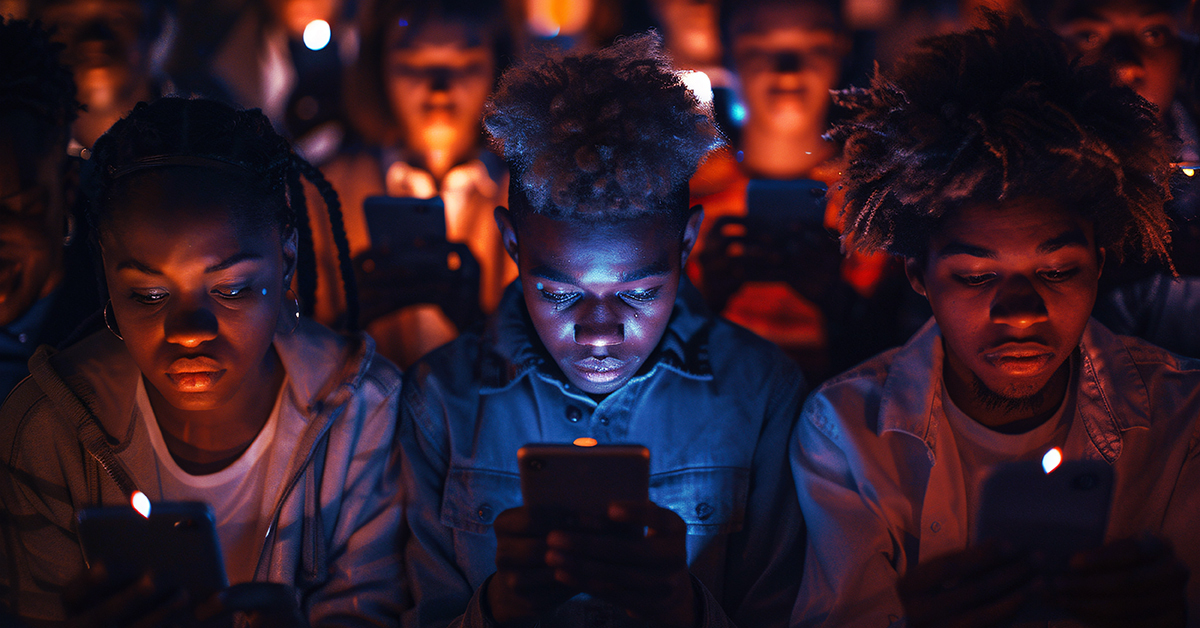
When I am out in public, I see people on their phones. On public transport, everyone is staring down at their phone.

I’m not trying to lament against the use of phones and start panicking about “Smartphone Zombies’.

When it comes to phone games, Africa is sitting on a gold mine—or, shall I say, a game mine.

Africa has the youngest population in the world, yet the African gaming industry is set to surpass 1 Billion (US dollars) this year alone.

According to Statista, in 2023, around 40 per cent of the population was aged 15 years or younger, compared to a global average of 25 per cent.

Based on the statistics, it does make sense that, in Africa, as I previously stated, we use our smartphones for everything!

Smartphones have become so much more essential to everyday life for so many people.

It makes much more economic sense to use one device for everything instead of having a personal phone, a work phone, a Laptop, a desktop, a gaming console, etc.

According to Time Doctor, the average monthly salary in Africa is approximately 769 USD (US dollar), as per the exchange rates in April 2023.

This is about ten times lower than in the USA and UK, where average salaries are 7,900 USD and 7,795 USD, respectively.

We live in a time when inexpensive Smartphones are better than ever.

They can be used for essential everyday tasks like making phone calls, using messaging apps like WhatsApp and Telegram, email, writing drafts, using most apps, using maps and taking pictures.

The cameras on the cheaper smartphones are much better than those on the midrange smartphones two years ago.

Where does mobile gaming fit into all of this?

Due to Smartphones being more affordable and having easily accessible mobile data. This has resulted in the rise in Smartphone use in Africa.

More people have access to devices that support gaming. So since we do everything else on our phones, it’s no surprise that we’re also gaming on our phones!

The Pan Africa Gaming Group (PAGG) and GeoPoll disclosed findings from a survey indicating that approximately 92% of gamers across the continent prefer gaming on their smartphones.

According to the Newzoo Global Games Market Report for 2023, Africans spend an average of $6 per year on games, predominantly through in-app purchases on mobile games.

Sub-Saharan Africa alone witnesses total in-app purchase spending of $778.6 million, constituting 90% of all games revenue in the region. South Africa leads with an average revenue per user of $12 per year according to the African Games Industry Report of 2022.

The surge of mobile gaming in Africa has been a driving force in economic and technological growth.

The rise in local economic opportunities has risen.

For one, African developers are now developing technology, apps, and games for the African market.

A startup in Lagos called ‘Chopup’ specializes in developing mobile games with African themes and characters.

There’s also huge potential for foreign investors in the mobile gaming sector.

In January, Egyptian esports platform Gbarena entered into an agreement to acquire Tunisia-based Galactech in a $15 million share swap deal.

South Africa-based gaming startup Carry1st, founded in 2018, recently raised US$27 million in a pre-Series B round, the single largest fundraiser for any African gaming startup.

Conclusion

The rise of mobile gaming in Africa is more than just a trend—it’s a game-changer. With 200 million gamers and an industry set to hit over $1 billion in revenue, mobile gaming has become a big part of everyday life here.

Africa’s young population and the widespread availability of affordable smartphones have created a vibrant gaming scene accessible to millions.

Smartphones are now essential tools, blending communication, work (I wrote a lot of this blog on my Smartphone), and entertainment into one handy device.

This makes sense economically, especially considering the average salary here.

The surge in mobile gaming is driven by cheaper, better-quality phones, making gaming an easy and popular pastime.

Beyond just fun, mobile gaming is boosting the local economy.

African developers are making games that really connect with local players, and international investors are showing growing interest.

Recent deals and funding rounds highlight the huge potential in this sector.

Africa is not uniform but a dynamic and varied terrain of mobile gaming communities. These communities span Tunisia, Ivory Coast, Liberia, Nigeria, South Africa, Morocco, Egypt, and beyond.

The horizon of Africa’s gaming world is exciting, reaching many communities and types of people.

The rise of mobile gaming is transforming not just how we play but also driving economic growth and innovation.

As Africa continues to ride this wave, the future of gaming here looks incredibly promising.

Check out www.exscape.io and how we are revolutionising the mobile gaming industry.